In June 2026, I inspected a dormered Cape Cod on East School Lane in Yardley, in Yardley, under a mile from the Delaware River. The house dates from the mid-twentieth century, on public water, with an oil-fired Burnham boiler. It showed well from the street. But it is an older home near the river, and that is exactly the housing stock where the real story is in the basement and the crawl space, not the curb appeal.
Here is what this inspection found, and why a vintage Yardley home this close to the water deserves a moisture-and-drainage-focused inspection rather than a generic checklist.
1. Damp Basement Walls With Possible Mold
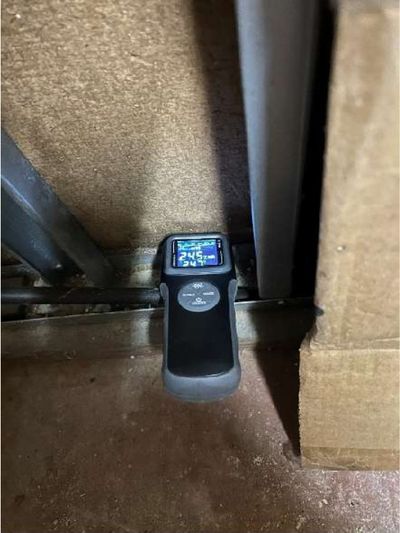
This is the finding that leads the report. Sections of the basement walls measured damp on the moisture meter, and both the partition wall and the foundation wall showed dark discoloration consistent with possible mold. In an older home this close to the Delaware River, damp masonry is not a surprise, but discoloration on top of damp readings is a combination you test, not one you assume away.
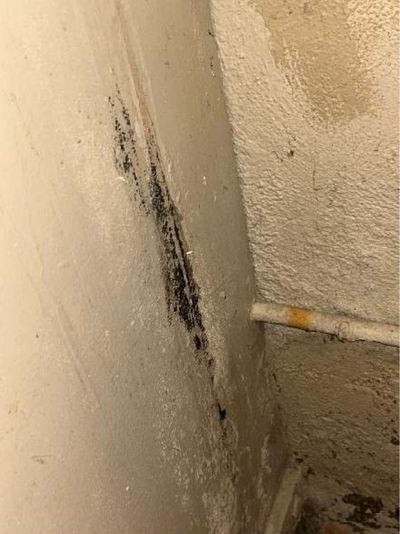
Discoloration on a basement wall is not automatically mold. It can be efflorescence or old staining. But here it sat on walls that read damp on the meter, so the correct response was to recommend air sampling before closing. Air sampling identifies whether spore concentrations are elevated and which types of mold are present, which helps turn "possible mold" into an actual answer.
2. A Dirt-Floor Crawl Space With Past Water Infiltration
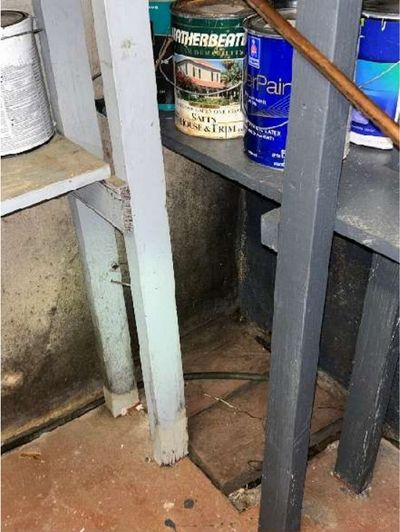
Part of this home is over a dirt-floor crawl space, and it showed clear evidence of past water infiltration along the foundation. A dirt floor with no vapor barrier is an open moisture source, feeding humidity up into the framing and the living space above, and in a home this near the river that is a condition to take seriously rather than ignore.
Getting into a low crawl space and looking at the foundation and the framing is exactly the work a checklist inspection tends to skip. In these older Morrisville and Yardley homes, the crawl space is where the moisture story either gets caught or gets missed.
3. A Rebuilt Basement Wall and Possible Asbestos Floor Tiles
One section of the basement wall had been rebuilt around the plumbing waste drain. That is worth a direct question to the seller, since a wall rebuilt around a drain usually means something happened there, a leak, a repair, or a past access cut, and the buyer should know the history before closing.
Separately, the basement had nine-inch floor tiles, and in a home of this age those are a classic suspect for asbestos-containing material. Intact tile left alone is generally low risk, but cracked or disturbed tile is when fibers can go airborne, so the tiles were flagged as possible asbestos and testing was recommended before any renovation or removal.
4. A Wet Garage Ceiling, a Rotted Door Base, and a Safety Stop That Does Not Reverse
The garage had an active problem, not just an old stain. A water stain on the garage ceiling measured wet on the moisture meter, meaning it was taking on water at the time of the inspection rather than being an old dried mark. There was also rot at the base of the garage access door, and the automatic garage door's safety reverse did not work, which is a genuine safety issue.
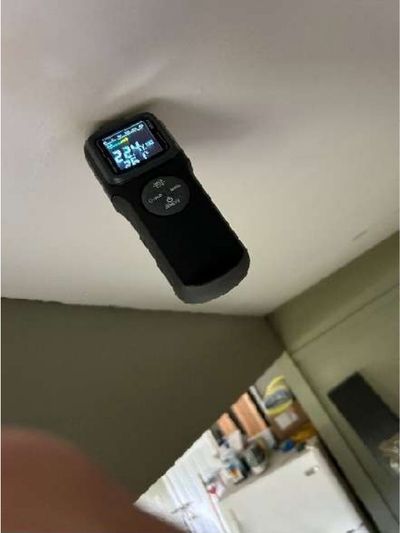
A garage door that does not reverse when it meets an obstruction is one of the few findings that is a hazard to people, not just to the structure, and it should be corrected right away. The wet ceiling needs its water source traced and fixed, and the rotted door base needs repair before it spreads into the framing.
5. An Obsolete Pushmatic Sub-Panel and an Electrical Safety Cluster
The garage had a Pushmatic sub-panel, an obsolete push-button panel design whose parts are hard to source and whose breakers get less reliable with age. It did not travel alone. There was exposed branch wire, non-grounded three-prong receptacles, and missing cover plates, the ordinary dated-wiring punch list of a home this age.
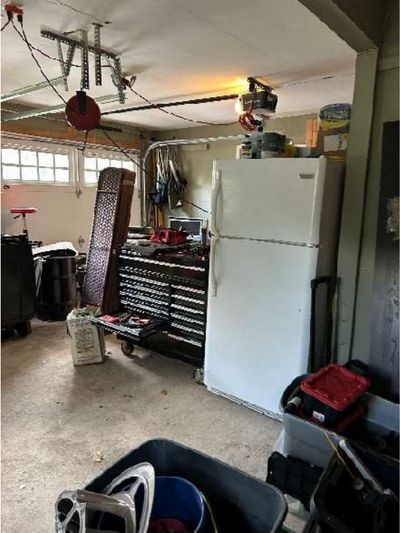
None of this is an emergency on its own, but exposed wire and missing covers are correctable safety items, and an obsolete panel is something a buyer should have a licensed electrician evaluate and budget for. Documented together, they tell the buyer what the electrical system actually needs.
6. Deteriorated Chimney Joints and an Open-Jointed Firebox
The chimney had deteriorated brick joints with one loose brick, and inside, the fireplace firebox and flue showed cobwebs and open brick joints. Open joints in a firebox and flue matter because that is the assembly meant to contain heat and combustion byproducts, and gaps in it are both a masonry problem and a safety consideration.
The loose brick and open joints on the chimney let water into the masonry and should be repointed, and the firebox and flue should be evaluated by a qualified chimney contractor before the fireplace is used. In an older Langhorne or Yardley home, chimney and firebox masonry is a routine but important item to plan for.
What Buyers Should Expect From Home Inspections in Yardley and Lower Bucks County
This inspection found damp basement walls with possible mold, a dirt crawl space with past water, a rebuilt wall and possible asbestos tiles, an active wet garage ceiling, an obsolete electrical panel, and deteriorated chimney and firebox masonry, on a home that showed well from the street. That is not a bad house. It is a normal mid-century Yardley-area Cape Cod, and the findings were age-related and moisture-driven rather than a sign of neglect.
What makes an inspection out here different is the water. Yardley Borough sits on the Delaware River, and the pre-1950 housing stock comes with damp basements, dirt crawl spaces, and old floor tiles as standard equipment. Those are exactly the systems a generic checklist rushes past. Getting a moisture meter on the walls, eyes into the crawl space, and a careful look at the old masonry and wiring comes from having inspected a lot of these Levittown, Morrisville, and Yardley-area homes.
If you are buying a home in Yardley or the surrounding Lower Bucks County communities, schedule an inspection with All Seasons. I personally perform every inspection, and I know the vintage Delaware River homes out here.
Bob Klebanoff
Owner, All Seasons Home Inspections
610-348-6728 | Free Estimate