In July 2026, I inspected a two-story detached home on Sheeder Road in Phoenixville, in Chester County. The house was about 60 years old, on a private well, with oil heat. It presented well. But it had two systems that most buyers moving out here from the city have never had to think about, a well and an oil tank, and both of them turned up findings.
Here is what this inspection found, and why the well-water and oil-heat combination that is so common out here deserves a closer look than a generic checklist gives it.
1. A Corroded Oil Tank at Risk of Leaking
The oil tank in the basement had a heavy band of corrosion running across the bottom of the shell. The bottom seam is exactly where an oil tank tends to fail, because condensation and water settle to the lowest point inside the tank and rust it from the inside out.
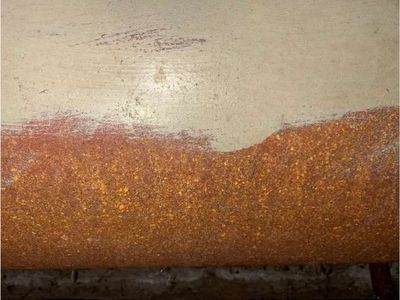
This matters more than a typical rust finding because an oil tank leak is one of the more expensive problems a home can develop. Heating oil that leaks into the basement floor or the surrounding soil becomes an environmental cleanup, not a plumbing repair. A home inspection covers the visible condition of the tank and its lines, and when corrosion is this advanced the correct step is to have an oil heat contractor further evaluate it before closing. Catching this now is far cheaper than discovering it later.
2. Three Separate Plumbing Leaks, Including the Well Supply Line
The plumbing turned up three separate active leaks in the basement. First, the electric water heater was leaking, with water pooling at its base. A leaking tank is at the end of its service life and is a replacement, not a repair.
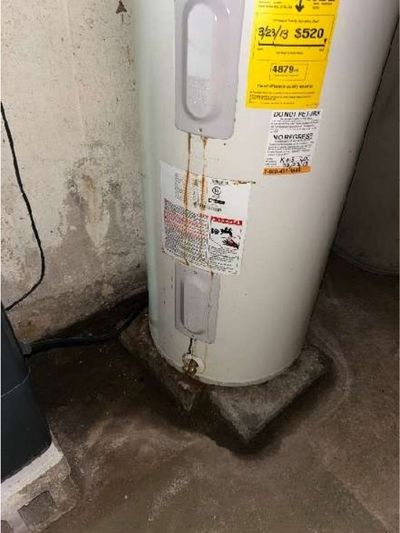
Second, there was a leak on a water supply line running through the basement joist bay. Third, and specific to a well-water home, there was corrosion and a leak on the well water supply line at the pressure tank.
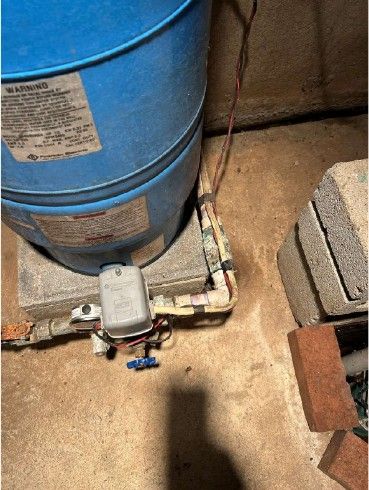
That well supply line is the finding a checklist inspector coming from a city rowhome background would be most likely to gloss over. Outside the public water systems in Collegeville and Royersford, private wells are common across much of the Phoenixville and Perkiomen Valley area, and the pressure tank and supply piping are the heart of the water system. Corrosion and a leak there are not cosmetic. They were documented in detail so the buyer knew exactly what the water system needed.
3. Mold-Like Discoloration and Past Water Infiltration in the Basement
One section of the basement wall, near a pipe penetration at floor level, showed dark discoloration consistent with possible mold. Separately, there was evidence of past water infiltration elsewhere in the basement.
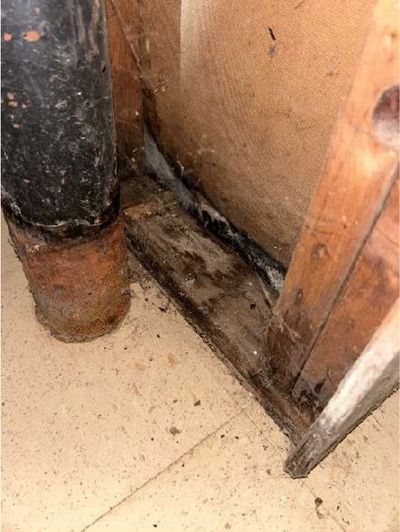
Discoloration on a basement wall is not automatically mold. It can be efflorescence or old staining. But when it appears next to a moisture source, and there is separate evidence of past water in the basement, the correct response is to test rather than assume. Air sampling identifies whether spore concentrations are elevated and which mold types are present. It was recommended here before closing.
4. A Leaking Supply Line in the Joist Bay
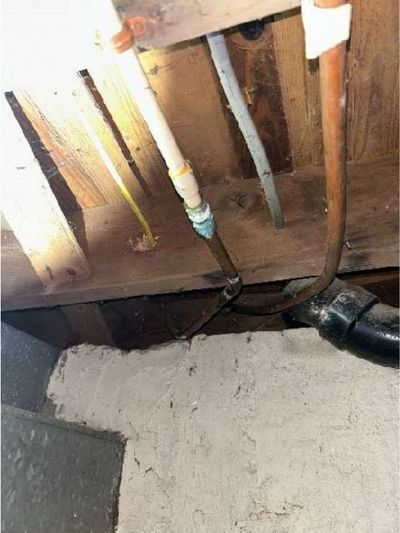
Small supply line leaks are the kind of finding that does its damage slowly and out of sight, wetting the framing above it over months. Finding it requires an inspector who gets into the basement and looks up into the joist bays rather than glancing around from the stairs.
5. Roof Shingles and Chimney Masonry at Age
The asphalt roof shingles were pitting and deteriorating, with debris in the gutters and a split at the back gutter seam. The chimney had open and deteriorated brick joints, and the stucco chimney showed sections of deterioration as well.
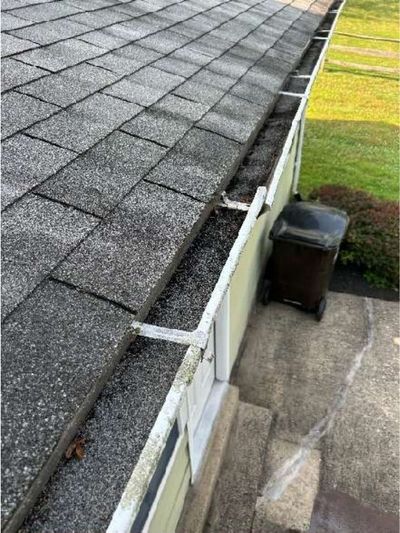
None of this is unusual for a 60-year-old home, and none of it is an emergency. Deteriorated shingles are a budget item to plan for. Open brick joints on a chimney let water into the masonry and should be repointed and sealed. These were documented so the buyer could plan the roofing and masonry work rather than be surprised by it.
6. Crawl Space, Electrical, and the Rest of the Punch List
The crawl space had fallen insulation and stored items sitting on the ground, which were flagged for cleanup and re-securing. On the electrical side, several locations were missing the GFCI protection they should have (the back deck, the addition bathroom, and the garage), there were receptacles with reverse polarity, and there were non-grounded three-prong receptacles. The gas fireplace insert was not operational and had an unsecured front panel, and there were cobwebs in the chimney flue. A basement window pane was cracked.
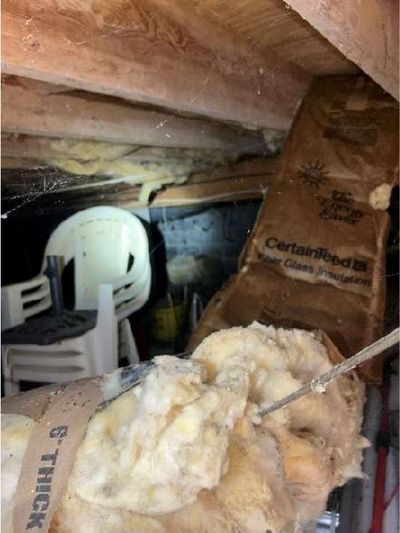
Individually these are small. Together they are the ordinary punch list of a well-lived-in older home, and the value of the report is that every one of them is written down and accounted for.
What Buyers Should Expect From Home Inspections in Phoenixville and Chester County
This inspection found a corroding oil tank, three plumbing leaks, possible mold, aging roof and chimney, and a list of smaller items, on a home that showed well. That is not a bad house. It is a normal 60-year-old Chester County house, and the findings were age-related rather than a sign of neglect.
What makes an inspection out here different is the well and the oil heat. Buyers coming from King of Prussia or from the city are often looking at a private well pressure tank and a basement oil tank for the first time, and those are exactly the systems a generic checklist tends to rush past. Knowing where an oil tank fails, and knowing to check the well supply line for corrosion, comes from having inspected a lot of homes in this specific market.
If you are buying a home in Phoenixville or the surrounding Chester and Montgomery County communities, schedule an inspection with All Seasons. I personally perform every inspection, and I know the well-water and oil-heat homes out here.
Bob Klebanoff
Owner, All Seasons Home Inspections
610-348-6728 | Free Estimate
Home Inspections in Phoenixville and the Surrounding Area:
Phoenixville Collegeville Royersford King of Prussia Norristown Pottstown Audubon