In June 2026, I inspected a wood-sided contemporary home built around 1996 on a wooded lot in Schwenksville, in the Perkiomen Valley part of Montgomery County. It sat on private well and septic and had a lovely backyard with an in-ground pool and a spa. The house itself was solid. The pool is where the serious findings were.
I am leading with the pool on purpose, because a backyard pool is often a big reason a buyer wants a house like this, and it is also where I most often find things that can actually get someone hurt. Here is what this inspection turned up, starting with the water.
1. A Cluster of Pool Life-Safety Defects
The pool had several life-safety problems at once, and they add up to a real risk rather than a punch list. There was no perimeter fence around the pool, and the gate that was there did not self-close or self-latch, so nothing was stopping a child from walking straight to the water. The GFCI receptacles at the pool would not reset, which means the shock protection was not working. The pool motor had a disconnected ground. And the electrical panel serving the pool was not secured, leaning loose rather than mounted.
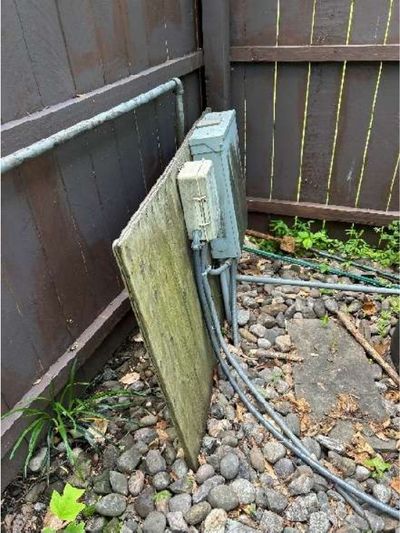
The disconnected ground on the pool motor is the one that worries me most. Pool equipment has to be bonded and grounded so that a fault cannot put voltage into the water or the metal around it, and a swimmer in the water has no way to know the protection is gone.
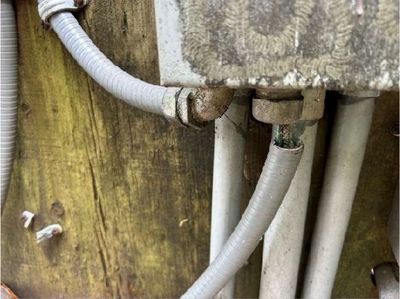
Any one of these would be worth flagging. All of them on the same pool means the pool should not be used until a licensed electrician and a pool contractor have corrected the barrier, the gate, the GFCI protection, and the grounding. This is the heart of why I do not treat a pool as a bonus item that gets a glance from the deck.
2. Cracked Pool and Spa Surfaces and a Dead Heater
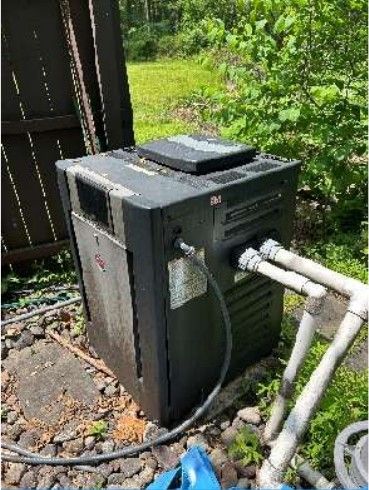
Both the pool and the spa had cracked and chipped surfaces. On the equipment side, there was a leak at the pump motor, the gas pool and spa heater would not ignite when I tried to fire it, and the spa bubbler was not working.
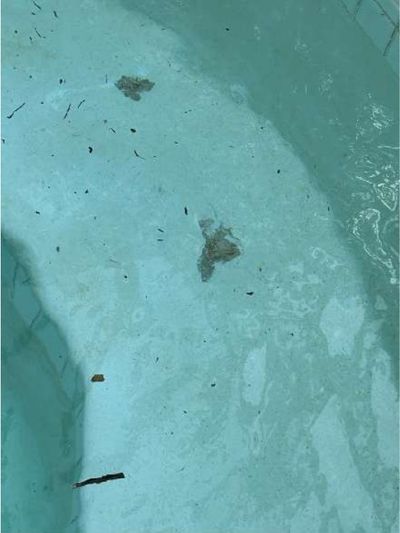
None of this is unusual for a pool that was likely installed when the house was built in the mid-1990s. Surfaces wear, patches age, and heaters and blowers reach the end of their life. What matters is that a buyer knows the pool and spa need surface evaluation and that the heater and bubbler are not currently working, so the cost of getting the whole system swim-ready is part of the buying decision and not a surprise the first warm weekend.
3. Wood-Siding Rot Driven by Missing Gutters
The house has wood siding, and most of the roof had no gutters or downspouts. That combination is exactly how you get rot on a home like this. Roof water sheets straight down onto the siding, the deck framing, and the soil at the foundation instead of being carried away. The result here was rot in the wood siding, rot in the deck header, and rot in the back deck step handrail.
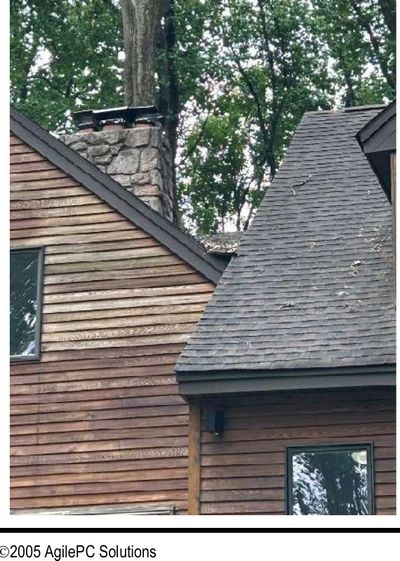
This is a pattern I see all over the wooded parts of the Perkiomen Valley, in Skippack and Harleysville as much as in Schwenksville. The 1980s and 1990s wood-sided contemporaries out here are beautiful, but the wood only lasts if water is kept off it. Adding gutters and downspouts and repairing the rotted siding and deck members is the kind of work that protects the whole exterior, and it was documented so the buyer could budget for it.
4. Attic Pest Intrusion and Water Stains
Up in the attic I found mice droppings across the plywood and framing, which is common on a heavily wooded lot where the surrounding trees give rodents easy access to the roof and eaves. I also found water stains on the attic sheathing. Importantly, those stains measured dry on my moisture meter, meaning they are evidence of a past leak rather than an active one.
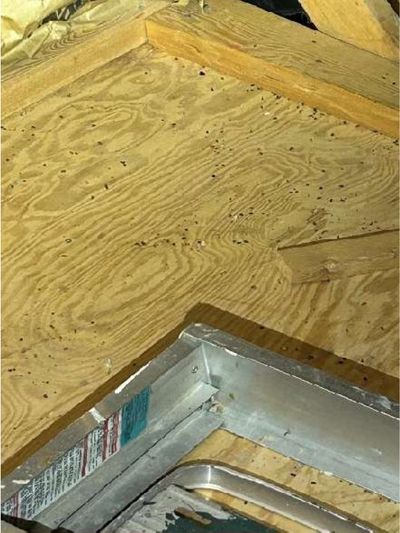
The distinction between a dry stain and a wet one is a big part of the value here. A stain that reads dry tells the buyer the attic has had water in the past but is not leaking now, so the priority is sealing the rodent entry points and keeping an eye on the stained area rather than chasing an active roof leak. Guessing at that without a meter is how buyers either panic over nothing or ignore a real problem.
5. Soot and Creosote in the Chimney Flue
The fireplace chimney flue had a buildup of soot and creosote. Creosote is the tar-like residue that wood smoke leaves behind, and it is combustible, which is what makes a dirty flue a chimney fire risk.
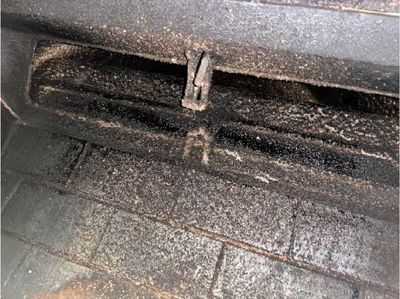
This is a straightforward one. Before the fireplace is used, the flue should be cleaned and inspected by a certified chimney sweep. It is inexpensive relative to the risk, and it is the kind of thing a buyer wants on the list before the first cold night rather than after.
6. Geothermal Heat Pump, Air Flow, and Missing Detectors
The home is heated and cooled by a geothermal heat pump, which is an efficient system and a nice feature. The issue I found was weak air flow to the second floor, so the upstairs was not getting the conditioned air it should. Separately, and this is a safety item, the home was missing carbon monoxide and smoke detectors on all levels.
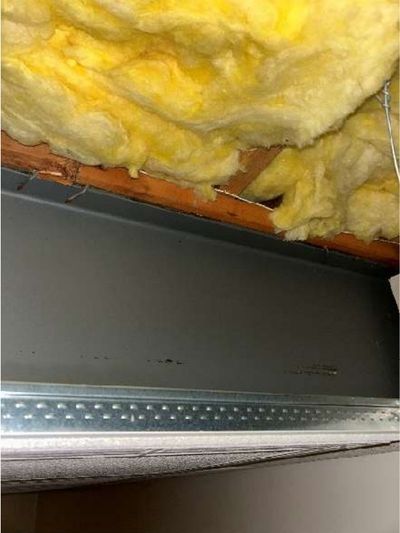
The air flow is a comfort and balancing issue a heating contractor can sort out, often with duct adjustments. The missing detectors are not optional. Every level of the home, and the areas near the bedrooms, need working smoke and carbon monoxide alarms, and on a home with gas appliances and a fireplace that is a basic life-safety requirement. It is a cheap fix and it was flagged to be done right away.
What Buyers Should Expect From Home Inspections in Schwenksville and the Perkiomen Valley
This inspection found a cluster of pool life-safety defects, cracked pool and spa surfaces with a dead heater, wood-siding rot from missing gutters, attic pest intrusion, a dirty chimney flue, and a geothermal system that needed balancing, on a 1996 home that showed well. That is not a bad house. It is a normal custom contemporary in this market, and the findings were the age-related and maintenance items you would expect.
What makes an inspection out here different is the mix of features: a backyard pool and spa, wood siding, a heavily wooded lot, private well and septic, and a geothermal system. Buyers touring a place like this in Collegeville or Royersford are often focused on how much they love the pool and the setting, and the pool is exactly where the defects that can hurt someone tend to hide. Knowing to test the GFCI protection, check the equipment bonding, and look for the barrier and gate hardware comes from inspecting a lot of pool homes in this specific market.
If you are buying a home in Schwenksville or the surrounding Perkiomen Valley and Montgomery County communities, schedule an inspection with All Seasons. I personally perform every inspection, and if there is a pool, I inspect it like it matters, because it does.
Bob Klebanoff
Owner, All Seasons Home Inspections
610-348-6728 | Free Estimate
Home Inspections in Schwenksville and the Surrounding Area:
Schwenksville Collegeville Skippack Harleysville Lansdale Royersford