I've been performing PRO-LAB certified mold testing in the Philadelphia region for over 20 years, and the question I hear most often is simple: "Do I actually need a mold test?" The honest answer is that not every home needs one. But there are specific warning signs that should prompt you to pick up the phone, and ignoring them can be costly.
Here are the seven signs I tell clients to watch for.
1. Musty or Earthy Odors
This is the most common early indicator, and the one that's easiest to dismiss. A persistent musty smell, particularly in basements, crawl spaces, bathrooms, or near HVAC systems, almost always indicates some form of microbial growth.
The smell is caused by microbial volatile organic compounds (MVOCs): gases produced by mold as it grows. By the time you can smell them, there is typically active growth somewhere in the space. The source isn't always visible. Mold can grow behind drywall, inside HVAC ductwork, beneath carpet padding, and in other concealed areas.
If a room or area of your home has a smell you can't explain, professional air sampling can determine whether mold spore levels are elevated, even when no mold is visible.
2. Is visible discoloration on walls or ceilings a sign of mold?
Sometimes, but not always. Dark spots, staining, or discoloration on walls, ceilings, or window frames can be mold, ranging in color from black and dark green to white, gray, or orange depending on the species. It can also be mineral deposits, dirt, or staining from a resolved leak. A surface swab or tape-lift sample sent to a lab is the only way to confirm which one you're looking at.
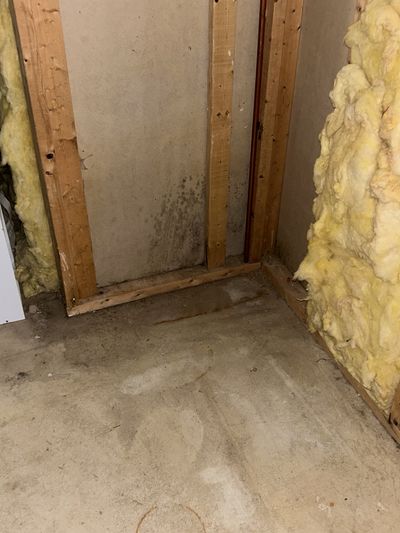
One important note: fresh paint can cover mold. If you're buying a home and you see areas with fresh paint in otherwise unpainted spaces, particularly in basements, laundry rooms, or bathrooms, that warrants attention. Cosmetic treatments don't address the underlying problem, and air sampling can reveal what's happening behind the surface.
3. Does recent water damage or flooding mean you have mold?
Not automatically, but it puts the area at real risk. Mold can begin growing within 24 to 48 hours of water exposure, so any area that experienced a burst pipe, roof leak, flooding, appliance overflow, or sustained condensation needs a closer look, especially if the affected materials weren't professionally dried or removed within that window.
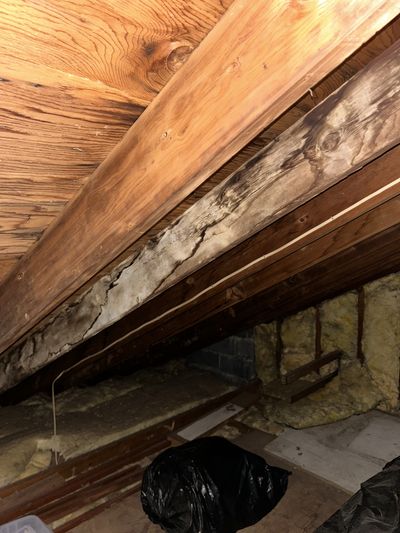
This is especially relevant when purchasing a home. Disclosure statements may mention prior water events, but they rarely specify whether remediation was performed to professional standards. Air testing after a known water event gives you objective data about the home's current air quality.
4. Can unexplained allergy symptoms that worsen at home be caused by mold?
Yes: allergy-like symptoms that improve when you leave the house and return when you're back (sneezing, congestion, watery eyes, throat irritation, headaches) are a documented sign of elevated indoor mold spores. Mold is a well-known respiratory irritant, and species like Stachybotrys, Aspergillus, and Chaetomium produce mycotoxins that can affect health at elevated concentrations. Children, elderly family members, and people with asthma or compromised immune systems are particularly sensitive.
Air quality testing can identify whether mold spore concentrations inside your home are elevated compared to outdoor baseline levels, and can identify the types of mold present. This information is critical both for understanding the health impact and for guiding appropriate remediation if needed. A test cannot tell you whether mold is the cause of anyone's symptoms, which is a question for a doctor: what a mold test can and can't tell you when someone is sick covers where that line sits and which Pennsylvania agencies do and do not respond to residential mold.
5. Does condensation on windows or pipes indicate a mold risk?
Persistent condensation, on windows, cold water pipes, or HVAC components, indicates elevated indoor humidity. When relative humidity stays above 60 percent, conditions are favorable for mold growth on virtually any organic surface: wood, drywall paper, carpet, dust, and even paint.
Condensation is especially common in older Philadelphia-area homes that lack modern vapor barriers, have inadequate bathroom or kitchen ventilation, or have thermal bridging at wall-to-window transitions. I see this constantly in the older housing stock around Cheltenham and Ardmore. Finished basements with inadequate dehumidification are another high-risk area.
If you see condensation regularly, the home's moisture conditions are likely supporting mold growth somewhere, whether or not you can see it. Air sampling gives you the full picture.
6. Should you test for mold if the home was vacant for an extended period?
Homes that sat empty for months, whether due to estate settlement, foreclosure, seasonal vacancy, or construction delays, are at elevated mold risk. Without active climate control, humidity levels fluctuate with outdoor conditions. In the Philadelphia region's humid summers, an unoccupied home with closed windows and no dehumidification can develop significant mold growth in a matter of weeks. Vacant estate-sale homes, in Norristown and across the region, are a common example.
If you're purchasing a home that was vacant, air quality testing before closing is a smart investment. It costs a fraction of what remediation costs if mold has established itself during the vacancy.
7. Should you get mold testing when buying a home in the Philadelphia area?
Yes, and it's becoming standard practice among informed buyers in the Philadelphia suburbs. A standard home inspection evaluates visible conditions: moisture issues, water staining, visible mold, but it does not include air sampling, and it cannot detect mold hidden behind walls, beneath flooring, or inside HVAC systems. Testing before closing is the only way to confirm what you'd actually be breathing.
Adding air quality testing to your pre-purchase inspection gives you laboratory-confirmed data about what you're breathing in the home. If levels are normal, you have documentation and peace of mind. If levels are elevated, you have leverage to negotiate remediation before closing, or to walk away entirely.
Given that professional mold remediation can cost anywhere from $1,500 to $15,000 or more depending on the scope, spending from $290 on testing before you close is one of the most straightforward cost-benefit calculations in the entire home-buying process.
What does professional mold testing actually involve from start to results?
Professional mold testing is a four-step process: a visual assessment to identify where to sample, air sampling with calibrated spore trap cassettes (one outdoor control plus one or more indoor locations), lab analysis at an accredited facility, and a written report interpreting the results. Lab results typically come back in two to three business days.
First, the inspector conducts a visual assessment of the property, looking for visible mold, moisture conditions, water staining, and areas of concern. This guides where samples are collected.
Next, air samples are collected using calibrated spore trap cassettes mounted on a sampling pump. Typically, one outdoor sample is collected as a control, plus one or more indoor samples from areas of concern. The process takes about 15 to 20 minutes per sample location.
The samples are sent to an accredited laboratory: All Seasons uses PRO-LAB, one of the largest and most respected environmental testing labs in the country. The lab identifies the types of mold spores present in each sample and their concentration levels (spores per cubic meter of air).
The inspector then interprets the lab results in context: comparing indoor levels to the outdoor control, evaluating which types are present, and providing clear, written recommendations. You receive a report that explains exactly what was found, what it means, and what (if anything) needs to be done about it.
When do you NOT need a professional mold test?
Not every situation calls for testing. If you can see obvious, widespread mold growth, say, visible mold covering a basement wall after a flood, you don't need a lab to confirm that you have a mold problem. You need remediation. Testing in that scenario adds cost without changing the outcome.
Similarly, small areas of surface mold in bathrooms (grout lines, caulk, shower surfaces) are typically maintenance issues that can be cleaned without professional testing. These are common in any home and don't usually indicate a larger air quality problem.
Testing is most valuable when the situation is ambiguous: you suspect something but can't see it, you want to verify conditions before a major purchase, or you need objective data to guide decisions about remediation scope.
What is the biggest risk of ignoring the signs you need mold testing?
Mold problems that are caught early are manageable and relatively inexpensive to address. Mold problems that are missed, because nobody tested, or because the signs were ignored, can become serious health and financial burdens.
If any of the seven signs above apply to your home or a home you're considering purchasing, professional air quality testing is a straightforward, affordable way to get clear answers.
All Seasons offers PRO-LAB certified mold testing and indoor air quality sampling throughout the Philadelphia region: Montgomery, Bucks, Chester, Delaware, and Camden Counties. Bob personally oversees every test and explains the results in plain English. Call 610-348-6728 for a free estimate.
Mold Testing Serving These Areas:
Philadelphia Norristown Upper Darby Cheltenham Ardmore Abington Willow Grove