In September 2026, I was asked to test a retail office suite on Pennell Road in Aston, Delaware County, after staff noticed mold near the HVAC vents and a stain had formed on a ceiling tile. Air grabs were taken in the occupied office space, and a swab was taken directly from the visible growth. The property manager needed to know whether the air in the occupied rooms was actually affected, not just whether mold was present somewhere in the building.
The lab results answered that question directly. The air sample from the back main office came back elevated, and the swab from the HVAC supply register came back positive for active fungal growth. This case study walks through what was found, why the location of the growth, on the supply side of the system rather than the return side, is the detail that ties the two results together, and what a commercial tenant or property owner should do with results like these.
1. Mold on the HVAC Supply Registers
Dark growth was visible across the vanes of a ceiling-mounted HVAC supply register in the office suite. A supply register is where conditioned air exits the ductwork and enters the room, which makes it a different kind of finding than mold on a return grille. A return simply pulls room air back toward the air handler. A supply register is the last surface that air touches before people breathe it.
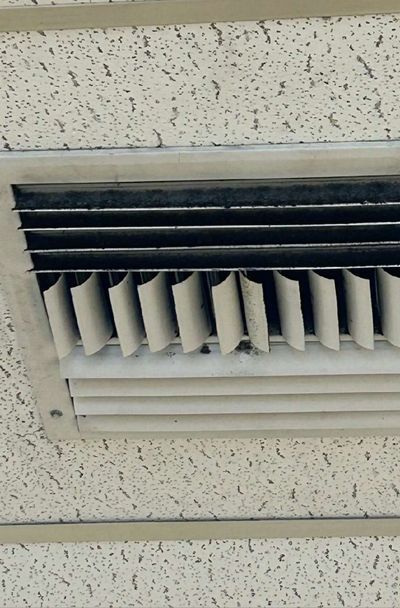
Growth established across the vanes like this does not happen overnight. It means the register, and likely the ductwork feeding it, has been holding enough moisture and organic material for mold to take hold and keep growing.
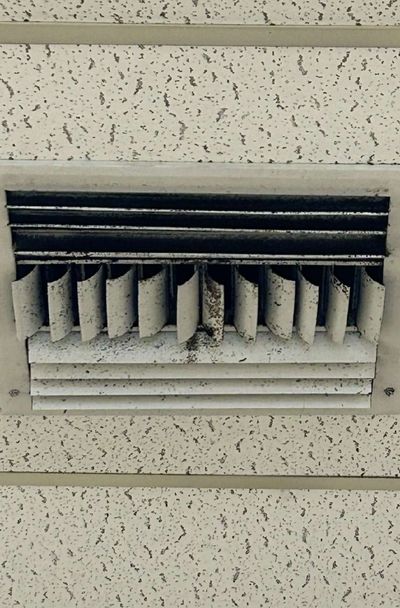
2. A Closer Look at the Contaminated Register
A closer angle on the same register showed the growth was not limited to a thin surface film. It was built up along the vanes and into the register housing itself, the kind of coverage that points to an ongoing condition inside the duct rather than a one-time dust buildup that happened to look dark.
3. A Water Stain Above the Back Exit Door
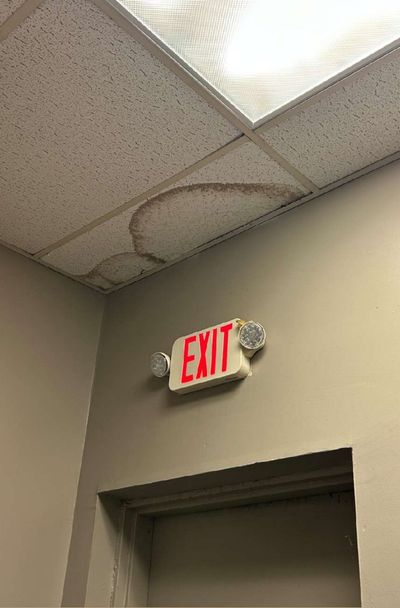
Separately from the HVAC finding, a ceiling tile above the back exit door showed a distinct water stain. This is the kind of finding that gets noticed but often gets dismissed as old and unrelated. In a mold investigation, a water stain is treated as a moisture entry point until proven otherwise, whether the source is roof flashing, the door header, or a leak that traveled along the ceiling grid before showing up above the door.
4. How Was the Suite Tested With Air Grabs and a Swab?
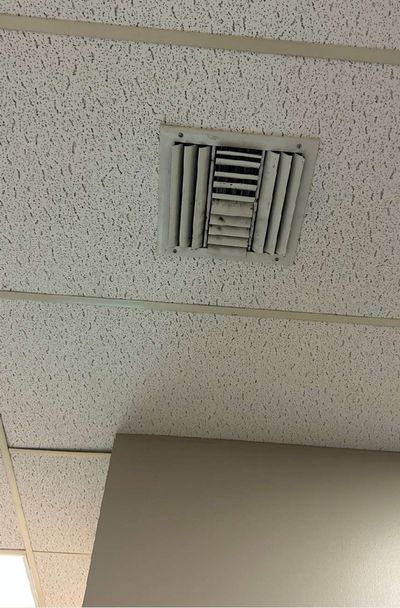
Two sampling methods were used, and they answer two different questions. Air grab samples were pulled in the occupied office space to measure what is actually in the air people are breathing during the workday. A swab sample was taken directly from the visible growth on the supply register to identify what that growth is at the source.
Both samples were sent to PRO-LAB for analysis. The air grab measures airborne spore concentration against expected background levels. The swab identifies whether growth on a specific surface is active and what it is composed of.
5. The Lab Results: Elevated Mold and Active Fungal Growth
The results confirmed both findings at once. The air sample taken in the back main office came back elevated, meaning the airborne mold concentration in that occupied room exceeded what would be expected in normal indoor air. The swab taken from the supply register came back positive for active fungal growth, meaning mold was growing on that register itself, not just spores that had settled there.
Taken together, these two results explain each other. A supply register delivers air directly into the room it serves. Active growth on that register, in the delivery path of the system, is a plausible and consistent source for an elevated air reading in the exact room that register feeds. This is different from a case where mold is found somewhere in a building but the air in the occupied space tests clean. Here, the source and the exposure line up.
6. Why Does the Supply Side Distinction Matter for This Aston Office Suite?
For a commercial tenant or landlord, the practical stakes are straightforward. Staff and customers occupy this air for a full workday, five or more days a week, not the occasional hour a homeowner might spend in a basement. An HVAC system that is actively distributing spores into occupied space through its supply registers is a different priority than mold sitting quietly on an unused surface in a storage area.
It also matters because responsibility for HVAC equipment and building envelope items in a leased commercial space is frequently split between tenant and property owner. A written, independent lab result documenting elevated mold in the occupied air and active fungal growth on a specific system component gives both sides something concrete to act on, rather than a disagreement based on who noticed what first.
7. What Are the Recommended Next Steps?
The report recommended having a qualified contractor further evaluate and remediate the mold to reduce the risk of a health hazard, since active growth was confirmed on an HVAC component actively feeding an occupied room with an elevated air result. Beyond remediation, the recommendations addressed the conditions that let this take hold: keep HVAC vents and ductwork clean, increase humidity control and HEPA filtration in occupied rooms, keep gutters and downspouts clean and properly aligned, maintain positive grade around the foundation, and trim vegetation back from the exterior walls to reduce moisture pressure on the building envelope.
For a commercial tenant or property owner, the sequence that makes sense here is to have the HVAC supply-side contamination and the ceiling water stain addressed together, since one may be feeding the other, and to confirm the moisture entry point above the exit door before it is simply painted over.
What Should Aston Commercial Tenants and Property Owners Know?
This office suite in Aston is a clear example of why the location of mold growth changes what it means. Mold on a return grille tells you the system is pulling something in. Mold on a supply register tells you the system is actively delivering it into the room. That distinction, paired with an elevated air sample from the exact room the register serves, is the kind of finding a commercial property needs documented by an independent tester, not assumed from a visual check.
If you own or manage a commercial property in Aston, Media, Chester, or elsewhere in Delaware County and you have noticed staining, musty odors near the vents, or an HVAC system you are unsure about, a commercial mold and air quality test is the way to get an answer you can act on instead of a guess.
Bob Klebanoff
Owner, All Seasons Home Inspections
610-348-6728 | Free Estimate
Mold Testing in Aston and the Surrounding Area:
Aston Brookhaven Boothwyn Media Glen Mills Chester Concordville