A mold air quality test measures the concentration and types of mold spores floating in your indoor air. Professional testing uses calibrated air pumps and accredited laboratory analysis to give you a precise count, typically reported in spores per cubic meter, that tells you whether your indoor mold levels are elevated compared to outdoor baseline conditions. Testing with All Seasons starts at $290, and results are available within 2-3 business days.
Elevated indoor mold often has no visible sign: no stain, no obvious water damage. When that happens, an air test is the first indication that something is growing somewhere hidden.
What is an Air-O-Cell spore trap test?
An Air-O-Cell spore trap is the cassette most laboratories use to capture airborne mold spores during an air quality test. A calibrated pump pulls a measured volume of air through the cassette, and spores impact onto an adhesive strip inside it. The lab examines that strip under a microscope, identifies each mold type, and counts the spores, reporting the result in spores per cubic meter. Air-O-Cell is a brand name that has become the common term for this spore trap sampling method, so "Air-O-Cell test," "spore trap test," and "mold air quality test" all describe the same process.
How does mold air quality testing work?
Mold air quality testing captures a measured sample of indoor air and analyzes it for mold spore content. The method used by professionals is spore trap sampling, which the American Industrial Hygiene Association (AIHA) covers in its published guidance on spore trap air sampling.
The test happens in five steps:
- Equipment setup: A calibrated air sampling pump is connected to a spore trap cassette (the most common brand is Air-O-Cell). The pump draws air at a precisely controlled flow rate of 15 liters per minute.
- Sample collection: The pump runs for 5 minutes, pulling exactly 75 liters of air through the cassette. Airborne particles, including mold spores, impact onto a sticky adhesive strip inside the cassette.
- Multiple sample points: I collect samples from each area of concern (basement, bedroom, living area) plus at least one outdoor baseline. A typical home requires 3-4 samples total.
- Laboratory analysis: The sealed cassettes are sent to a PRO-LAB accredited laboratory. A trained mycologist examines the adhesive strip under a microscope at 400-600x magnification, identifying each mold type and counting the spores.
- Report generation: The lab produces a detailed report listing every mold type found, its concentration in spores per cubic meter, and comparative data between indoor and outdoor samples.
What do mold spore counts in a lab report actually mean?
Lab results report spore concentrations in spores per cubic meter (spores/m3) for each spore type identified. There is no single EPA or federal threshold for "safe" versus "unsafe" mold levels. Interpretation requires comparing indoor results to the outdoor baseline and evaluating which types are present.
| Mold Type | Typical Outdoor Range | Concern Level Indoor | Notes |
|---|---|---|---|
| Cladosporium | 500 – 3,000 spores/m3 | Concern if indoor > outdoor | Most common outdoor mold; indoor elevation suggests moisture source |
| Penicillium/Aspergillus | 200 – 1,500 spores/m3 | Concern if indoor > 2x outdoor | Common indoor mold; often found in damp basements and bathrooms |
| Stachybotrys (black mold) | Rare outdoors (0 – 13) | Any indoor detection | Water-damage indicator; requires sustained wet conditions to grow |
| Chaetomium | Rare outdoors (0 – 13) | Any indoor detection | Water-damage indicator; often found with Stachybotrys |
The most important principle: context matters more than raw numbers. An indoor count of 800 spores/m3 of Cladosporium is normal if the outdoor count is 2,000. But an indoor count of 200 spores/m3 of Stachybotrys is concerning even at low numbers because this mold requires sustained water damage to grow and is rarely found outdoors in the Philadelphia region.
Why would visible mold and air test results not match?
One of the most common questions I get after delivering lab results is: "I can see mold on the wall. Why didn't the air test show high levels?" This happens more often than you'd expect, and the explanation is straightforward.
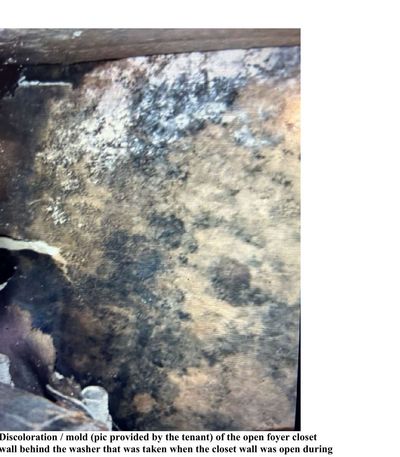
Mold spores become airborne when disturbed: by air movement, HVAC operation, or physical contact. Undisturbed mold on a surface may not release significant spores into the air at the moment of testing. Conversely, hidden mold in wall cavities or HVAC systems can produce elevated airborne spore levels without any visible growth in living spaces.
This is why professional mold assessment combines both visual inspection and air testing. Neither method alone gives the complete picture. The visual inspection finds the source; the air test measures the exposure.
What happens after you get your mold air quality test results?
Once I receive the lab report, I review the results and call you directly to explain what the numbers mean. There are generally three scenarios:
- Normal results (indoor levels at or below outdoor): No action needed. Your home's air quality is within normal range. I'll still note any moisture conditions that could lead to future problems.
- Mildly elevated (indoor 1.5-2x outdoor, common types): Often addressed by improving ventilation, running a dehumidifier to keep humidity below 50%, and addressing the underlying moisture source. Re-testing in 60-90 days can confirm improvement.
- Significantly elevated or water-damage types detected: Professional remediation is recommended. I do not perform remediation myself: this avoids any conflict of interest. I can explain what the results mean and what remediation should address, so you can get informed quotes from remediation companies.
One important note: I'm an independent testing company. I don't do remediation, and I don't receive referral fees from remediation companies. My only job is to give you accurate test data and honest interpretation. This independence is critical for trust. The person testing your air should never be the same person selling you the fix.
Why is mold air quality testing especially important in the Philadelphia area?
The Greater Philadelphia region's climate and housing stock create specific conditions that affect indoor air quality. Summer relative humidity averages close to 70%, and the area receives about 44 inches of rain a year. Combined with an older housing stock, where homes in established communities like Norristown, Upper Darby, Roxborough, and Ardmore average 50+ years old, moisture-related air quality issues are common.
I serve all five Pennsylvania counties surrounding Philadelphia (Montgomery, Philadelphia, Bucks, Chester, and Delaware) and offer mold testing in three New Jersey counties (Camden, Burlington, and Gloucester). Homeowners in Montgomery County towns like Ambler and Chester County communities such as Malvern most often call after a wet spring, when basement humidity climbs and musty odors first appear. If you're concerned about mold or air quality in your home, call me at 610-348-6728. I can typically schedule testing within the week, and lab results are typically back in 2-3 business days.
Need Professional Mold Testing?
All Seasons provides PRO-LAB certified mold testing and air quality analysis across the Philadelphia region and South Jersey. Owner-operator Bob personally collects all samples. Results in 2-3 days. Call 610-348-6728 for a free estimate.
Mold Testing Serving These Areas:
Philadelphia Norristown Upper Darby Cheltenham Abington Conshohocken Ardmore