A professional home air quality test with All Seasons starts at $290 in the Greater Philadelphia area. The test measures airborne mold spore concentrations inside your home, compares them against outdoor baseline levels, and identifies the types of mold present. Results come from a PRO-LAB accredited laboratory within 2-3 business days.
I've performed air quality tests across Montgomery, Philadelphia, Bucks, Chester, and Delaware counties over the past 20 years. When a home I test does show elevated indoor mold spore levels, the homeowner often had no idea there was a problem until the lab results came back.
What Does a Home Air Quality Test Measure?
A standard residential air quality test measures the concentration and types of mold spores in your indoor air. The test uses a calibrated air sampling pump that draws a measured volume of air, typically 75 liters over 5 minutes, through a spore trap cassette. The cassette captures airborne particles on a sticky collection surface, which is then sealed and sent to an accredited laboratory for microscopic analysis.
The lab identifies each mold type present and reports its concentration in spores per cubic meter of air. Common types found in Philadelphia-area homes include Cladosporium, Penicillium, Aspergillus, and Stachybotrys (black mold). The report compares indoor levels against the outdoor baseline sample: if indoor concentrations exceed outdoor levels, that indicates an active indoor mold source.
How Much Does Home Air Quality Testing Cost?
Professional home air quality testing with All Seasons starts at $290, and the total depends on the number of samples collected. These factors drive the pricing:
| Service | Typical Cost | What's Included |
|---|---|---|
| Standard Test (2-3 indoor samples + outdoor baseline) | Starting at $290 | Sample collection, lab analysis, written report |
| Comprehensive Test (4-6 samples) | Varies with sample count | More sample points for larger homes or multiple concern areas |
| Additional Sample Point | Starting at $75 each | Extra room or area tested |
| DIY Kit (settle plate) | $30 – $50 | Limited accuracy, no spore counts, not accepted for real estate |
The outdoor baseline sample is critical. It establishes what's "normal" for your area on the day of testing. Without it, indoor readings have no context. Every professional test should include at least one outdoor sample.
When Do You Need Air Quality Testing?
You should consider air quality testing when specific conditions suggest your indoor environment may be compromised. Based on 20 years of testing homes in southeastern Pennsylvania, these are the situations where testing provides the most value:
- Musty or earthy odors: The most reliable early warning sign. If you smell it, there's a moisture or mold source somewhere, even if you can't see it.
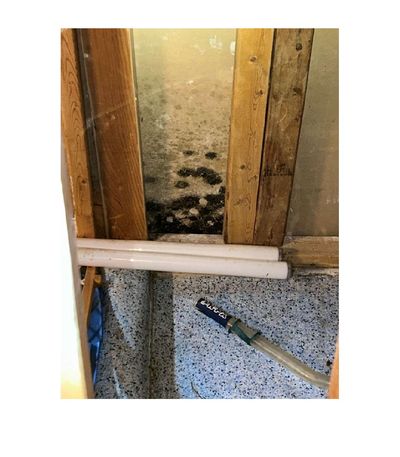
- Visible mold or water stains: Visible growth confirms a problem, but air testing reveals whether spores have spread beyond the visible area.
- Buying or selling a home: The American Society of Home Inspectors (ASHI) reports that 60% of existing homes have moisture issues. Testing gives both parties objective data.
- Unexplained respiratory symptoms: The EPA states that indoor air can be 2 to 5 times more polluted than outdoor air. If symptoms improve when you leave home, indoor air quality should be tested.
- After water damage or flooding: Mold can begin growing within 24-48 hours of water exposure, according to FEMA. Post-flood testing is especially important in finished basements.
- Older homes: Homes built before 1980 in the Philadelphia area, common throughout boroughs like Norristown, often have limited foundation waterproofing, inadequate ventilation, and materials that absorb and retain moisture.
How the Testing Process Works
A professional air quality test follows a straightforward process. This is exactly what happens when I test a home:
- Initial assessment (15-20 min): I walk the property looking for visible moisture indicators, water staining, musty odors, and conditions that could affect air quality. This helps me decide where to place sample points.
- Sample collection (5-10 min per sample): I set up a calibrated air pump with a spore trap cassette at each location. The pump draws 75 liters of air through the cassette over 5 minutes at a controlled flow rate of 15 liters per minute.
- Outdoor baseline (5-10 min): I collect at least one outdoor sample using the same equipment and method. This establishes the normal background spore level for comparison.
- Lab submission: Cassettes are sealed, chain-of-custody documented, and shipped to a PRO-LAB accredited laboratory for microscopic analysis.
- Results and interpretation (2-3 business days): The lab report identifies the mold types present and their concentrations. I review the results with you and explain what the numbers mean in plain language, no jargon, no scare tactics.
How do you read home air quality test results?
Air quality test results report mold spore concentrations in spores per cubic meter (spores/m3) for each sample location. The key comparison is indoor versus outdoor levels. There is no single federal standard for "safe" indoor mold levels, but the interpretation follows well-established guidelines used across the industry.
| Indoor vs. Outdoor | What It Means | Recommended Action |
|---|---|---|
| Indoor < Outdoor | Normal: indoor air is cleaner than outdoor | No action needed |
| Indoor = Outdoor (similar species) | Typical: spores are entering from outside | Generally no concern |
| Indoor > Outdoor (same species) | Elevated: possible indoor mold source | Investigate moisture source, consider remediation |
| Indoor has species not found outdoors | Active indoor growth: mold is growing inside | Locate source, professional remediation recommended |
Pay special attention to Stachybotrys (black mold) and Chaetomium. These types are associated with water-damaged buildings and are not typically found at significant levels outdoors. Any meaningful indoor detection of these species warrants further investigation regardless of the total count.
Is professional air quality testing better than DIY kits?
DIY air quality test kits available at hardware stores cost $30 to $50 but have critical limitations that make them unreliable for decision-making. Most use "settle plates": petri dishes left open for 24-48 hours that capture whatever particles happen to settle on the surface. This method does not measure actual airborne spore concentrations, cannot provide spore counts per cubic meter, and is not accepted by real estate professionals, lenders, or remediation companies.
Professional testing uses calibrated volumetric pumps that draw a precise amount of air through laboratory-grade collection media. This gives accurate, quantitative results: the actual number and types of spores per cubic meter of air. The EPA advises that mold sampling be conducted by professionals with specific experience in sampling protocols and interpreting results.
What makes air quality testing especially important for Philadelphia-area homes?
The Greater Philadelphia area has specific conditions that make air quality testing particularly relevant for local homeowners. The region's clay-heavy soils, older housing stock (median home age in Montgomery County is 50+ years), and humid summers create ideal conditions for indoor mold growth. Based on my experience testing homes across Montgomery, Philadelphia, Bucks, Chester, and Delaware counties, plus Camden, Burlington, and Gloucester counties in South Jersey, the most common issues include:
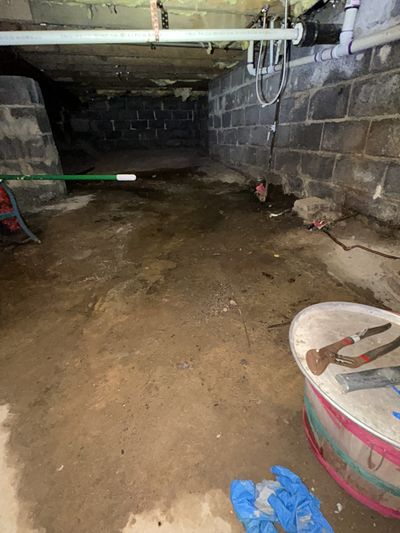
- Basement moisture: Older stone and block foundations common in the Philadelphia suburbs, including much of Ardmore and Conshohocken, allow groundwater seepage, especially during spring thaw and heavy rain seasons.
- Poor attic ventilation: Many older homes lack adequate soffit-to-ridge ventilation, trapping moisture in the attic space and promoting mold growth on roof sheathing.
- HVAC condensation: Older ductwork in unconditioned spaces creates condensation during humid Philadelphia summers, providing moisture for mold growth inside the duct system.
- Finished basements: Drywall and carpet installed directly against foundation walls trap moisture between the finish and the concrete, creating hidden mold growth that only air testing reveals.
If you're in the Greater Philadelphia area and concerned about your home's air quality, I can test your home in a single visit. Call me directly at 610-348-6728 or request a free estimate online.
Need Professional Mold Testing?
All Seasons provides PRO-LAB certified mold testing and air quality analysis across the Philadelphia region and South Jersey. Owner-operator Bob personally collects all samples. Results in 2-3 days. Call 610-348-6728 for a free estimate.
Air Quality Testing Serving These Areas:
Philadelphia Cheltenham Ardmore Upper Darby Norristown Abington Conshohocken