In June 2026, a commercial property owner on West Dublin Pike in Dublin, Bucks County, Pennsylvania (about 40 minutes north of Philadelphia), called me because mold was visible in several areas of the building. The owner did not need me to tell them there was mold. They could see it. What they needed was the part you cannot see: what genus it was, how bad the airborne levels were, and where the moisture was coming from. Those three answers are what turn a mold problem from a guess into a scoped, fixable project.
This case study walks through what the testing found. The short version is that swabs confirmed Stachybotrys, the wet-growing mold most people call black mold, at multiple locations, while the HVAC air samples came back not elevated. The longer and more useful version is why the crawl space under the building was the real finding, and what a commercial owner should do with results like these.
1. Mold Visible in Multiple Areas Throughout the Building
Mold was present in several separate areas of the building, not confined to one room. In the most exposed section, drywall had already been opened up, showing heavy black growth running up the wall framing and masonry behind it. When growth is this established behind finished surfaces, it means the material has been wet for a long time, not days.
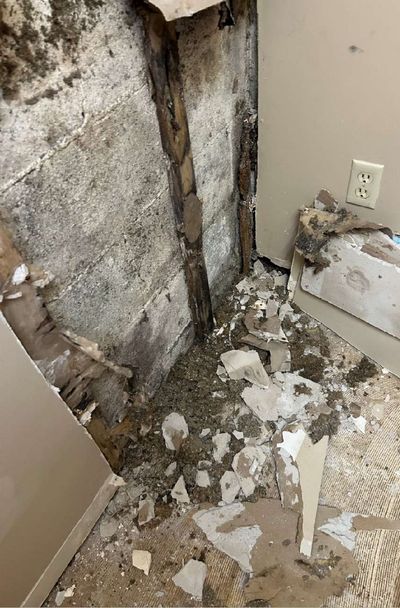
For a commercial property, mold in multiple areas changes the nature of the job. It is no longer a spot cleanup. It signals a building-wide moisture condition, which is why the sampling plan covered several locations rather than a single wall.
2. The Real Story: A Chronically Wet Crawl Space
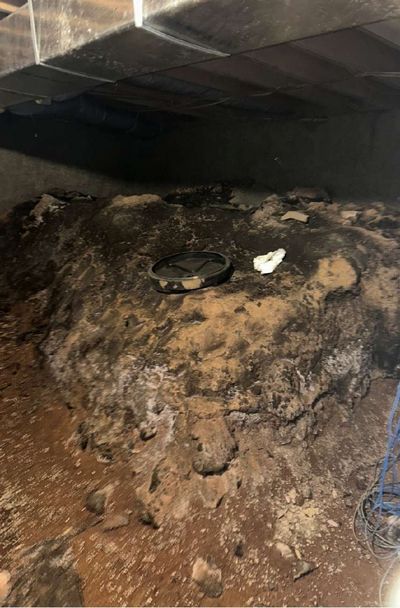
The most important finding was not upstairs. It was underneath. The crawl space had a dirt floor that was wet and muddy, standing moisture across the ground, and a sump pit, which itself tells you the building has a known, recurring water problem. A sump pit exists because water has needed somewhere to go.
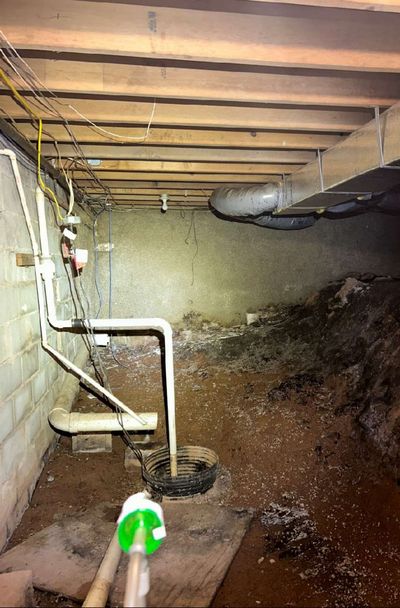
This is the finding that determines whether remediation actually works. You can remove every square foot of visible mold in the building, but if the crawl space stays wet, the moisture will keep rising into the framing and the mold will return. Tracing the source, rather than just cataloging where the mold shows, is the difference between a repair that holds and one that fails within a year.
3. Water at Floor Level: Staining, Tide Lines, and Baseboard Mold
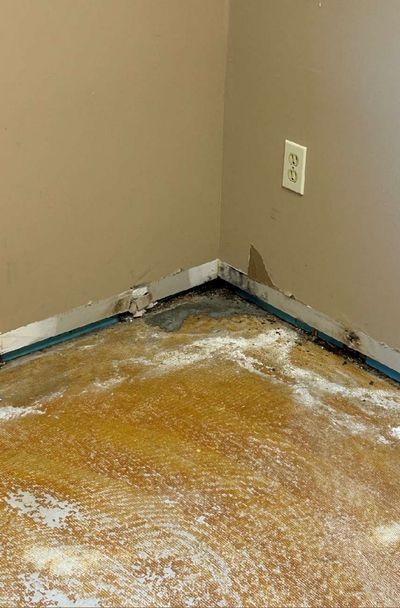
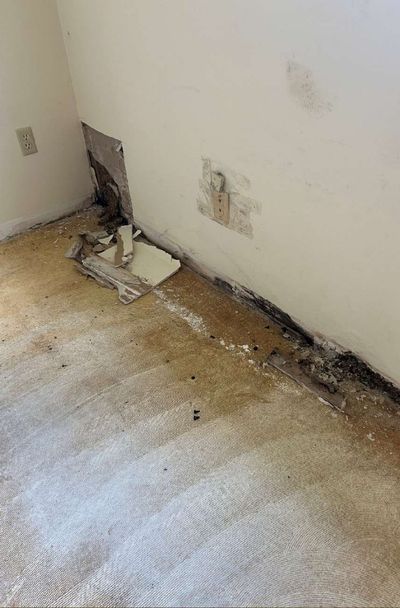
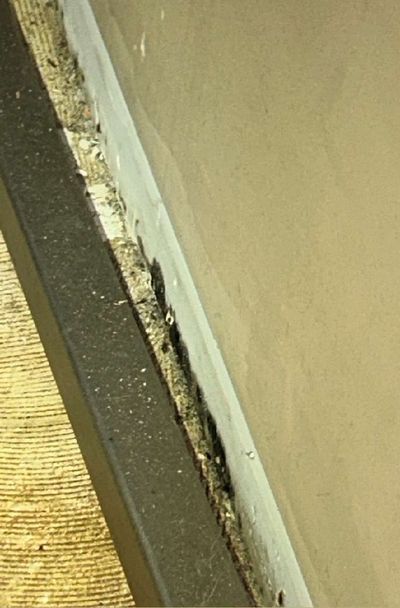
Consistent with a wet crawl space feeding moisture upward, the damage in the occupied rooms concentrated at floor level. Walls showed staining near the base, carpet and pad had been pulled up to reveal tide-line water marks across the subfloor, and mold was growing along the baseboards where the wall meets the floor.
4. How the Building Was Tested: Swabs and HVAC Air Grabs
Two testing methods were used. Swab samples were taken at multiple locations where mold was visible on walls, baseboards, and structural surfaces. Each swab goes to PRO-LAB for microscopic identification of the genus. Swabs answer the question, what is this.
Air grab samples were then pulled from the HVAC central return ducts. The return duct is where the system draws building air back in, so if mold spores were circulating through the occupied space, that is where they would concentrate. Air grabs answer a different question, is the ventilation system moving spores through the building.
5. The Lab Results: Stachybotrys Confirmed, Air Not Elevated
The swab results confirmed Stachybotrys at multiple locations. That is the finding that carries the weight, because Stachybotrys only grows where a material has been wet for a long time, and it produces mycotoxins hazardous both by inhalation and by direct contact.
Here is the result that surprises people: the HVAC air grabs came back not elevated. With visible mold throughout the building, many owners expect the air to be full of spores. The reason it was not comes down to what Stachybotrys is. Unlike dry, powdery molds that puff into the air when disturbed, Stachybotrys is wet and slimy, and its spores need moisture to move. In an undisturbed building it stays on the surfaces where it grows.
This is the point a commercial owner has to understand clearly: a not-elevated air result does not mean the building is fine. It means the mold had not yet been disturbed. The moment a contractor starts cutting out drywall without containment, that air number changes fast. The confirmed genus and the visible extent drive the decision, not the pre-remediation air count.
6. The Recommended Next Steps for the Owner
My report recommended having a qualified mold remediation contractor further evaluate and remove the mold to reduce the risk of a health hazard. The EPA guidance is that any discolored area larger than roughly three feet by three feet should be handled by a professional, and several areas here exceeded that. Beyond removal, the report addressed the moisture, because that is what makes remediation last: keep the HVAC filter and ducts clean, add humidity control and HEPA filtration in the most-occupied rooms, keep gutters and downspouts clean and aligned, maintain positive grade around the foundation with drainage added where needed, trim vegetation back from the exterior walls, dehumidify through the warm months, and repair any plumbing leak or water infiltration within 24 hours.
For any commercial owner, the sequence matters: confirm the genus and extent with testing, remediate under proper containment, fix the moisture source, then verify the result with independent post-remediation clearance sampling before the space goes back to full use. Skipping the clearance test, or skipping the crawl space fix, is how a building ends up paying for the same remediation twice.
What Dublin Commercial Property Owners Should Know About Mold Testing
This building in Dublin is a clear example of why testing is worth doing even when the mold is already visible. Seeing mold tells you that you have a problem. Testing tells you the genus, whether it is the kind that signals chronic moisture, whether your HVAC system is spreading it, and where the water is coming from. Those answers let an owner scope remediation accurately and negotiate with contractors from a position of knowledge rather than guesswork.
It also protects the owner. A commercial building with confirmed Stachybotrys at multiple locations is a documented condition with real occupant-exposure and liability implications. Having a written, independent report from a certified tester is exactly what an owner wants on file before, during, and after remediation. If you own or manage a commercial property in Dublin, Doylestown, Perkasie, or the surrounding Bucks County area and you have visible mold, water history, or an HVAC system you are worried about, testing is the first move.
Bob Klebanoff
Owner, All Seasons Home Inspections
610-348-6728 | Free Estimate
Mold Testing in Dublin and the Surrounding Area:
Dublin Perkasie Sellersville Doylestown Chalfont Hatfield