In 20+ years of inspecting homes throughout Montgomery, Bucks, and Chester Counties, I can tell you this with absolute certainty: water damage and mold go hand-in-hand. And mold doesn't wait. It begins colonizing wet surfaces within 24–48 hours of water intrusion. The difference between catching it early and discovering it years later, when structural damage and air quality issues become serious, comes down to knowing where to look and how to respond in those critical first hours and days.
This post walks you through the five most common places mold takes hold in homes like the pre-war stone colonials and brick twins that fill our region. I'll show you field photos from my own inspections, explain what causes the moisture, and tell you exactly what to do if you spot these warning signs in your own home.
Do crawl spaces and dirt-floor basements always have a moisture and mold problem?
The oldest homes in Philadelphia's inner suburbs, especially in Cheltenham, Elkins Park, and Wyncote, were built on stone foundations. Many of these properties sit on fieldstone or rubble walls that have been in the ground for generations. Stone is porous, and that's the problem. Water doesn't just sit on the surface; it wicks up through the masonry by capillary action, just like a paper towel absorbs spilled coffee.
In crawl spaces and dirt-floor basements, stone foundation walls often stay persistently damp. That sustained dampness is a direct invitation to mold. The water is coming up from below, the air is stagnant, and organic materials (wooden rim joists, joist ends resting on the stone, accumulated dust and debris) provide the food source. Mold thrives.
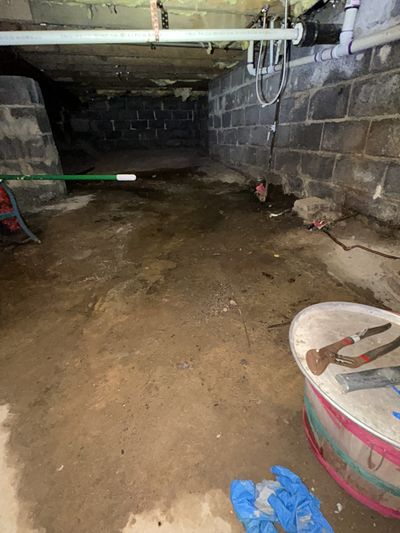
This is especially common in homes built before modern foundation waterproofing. Many of these homes never had a damp-proofing layer applied, or if they did, it's failed after 70–80 years. What I recommend: 1) Measure moisture regularly with a calibrated meter. 2) Install a vapor barrier on the crawl space floor to reduce ground moisture rising. 3) Run a dehumidifier during humid months. 4) Ensure crawl space vents are functioning (or seal them with a vapor barrier if you're installing mechanical dehumidification).
Why do rim joists and sill plates develop mold in older Philadelphia homes?
Ask most home inspectors what single location yields the most hidden mold, and they'll likely tell you: the rim joist. This is the area where the foundation wall meets the wooden framing structure: the band board or rim joist that sits on top of the stone or concrete. Water finds its way here from multiple directions: it soaks through exterior masonry, it condenses on the inside during cold months, and it creeps up through the foundation via capillary action.
The rim joist sits at a thermal boundary: it's exposed to cold outdoor air through the foundation and warm indoor air above. That temperature difference drives condensation. Meanwhile, the wood is pressed against cold, porous masonry, trapping moisture against the grain. Mold colonization is the inevitable result.
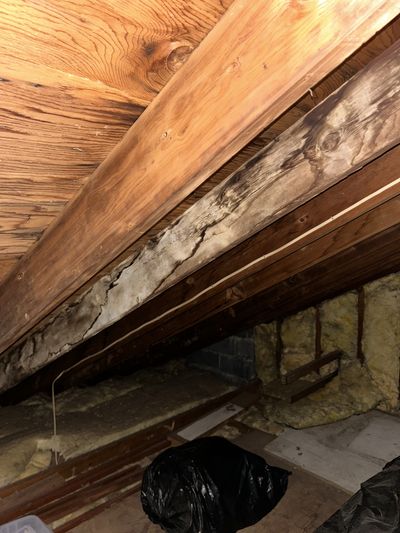
This is why rim joists are one of my top priorities during every inspection I personally oversee. Many inspectors don't look closely enough here, because the area is often dark, cramped, and partially obscured by rim board insulation. But this is where early-stage mold growth tells the true story of a home's moisture condition. If I see staining or spore colonization at the rim joist, I know water management is a problem throughout the basement or crawl space.
Why does mold grow around windows, doors, and trim in older homes?
Windows and doors are thermal breaks in the building envelope. In winter, the glass and frame get cold. If indoor humidity is high and there's inadequate air movement, condensation builds up. Wood trim and sills, especially on older homes where sills are lower and windows are smaller, become chronically damp. Failed caulking lets water run behind trim. Improperly sloped sills allow water to pool instead of drain.
The result: mold growth along the wood surfaces at the bottom of windows and doors, particularly on the interior faces that face into the room.
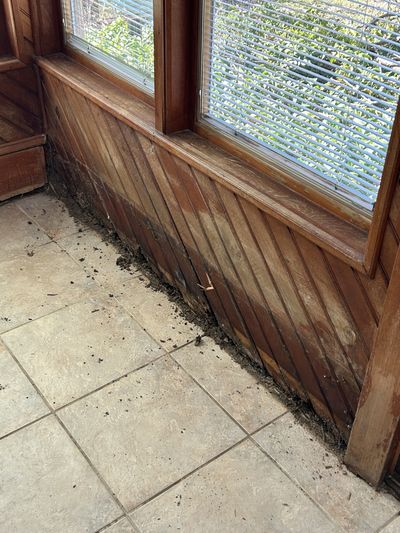
This is often easier to spot than rim joist mold because it's visible. What I tell homeowners: if you see this, you need to address the underlying moisture, either by improving ventilation and humidity control, re-caulking and re-sealing the exterior, or re-sloping the sill to ensure water drains away. Window trim mold is a warning flag, not just an aesthetic issue.
What does mold look like when it grows on wall surfaces?
Sometimes mold isn't hidden. It grows right on the surface of painted drywall in plain sight. You'll see circular or irregular patches of dark growth, usually ranging from olive-green to black, sometimes with lighter halos around the perimeter. This visible mold tells you two things: 1) there's an active moisture source, and 2) the mold colony is large enough that it's visibly proliferating.
Common causes: roof leaks above, condensation from humid basements, high indoor humidity during winter, or water intrusion from the exterior (behind siding, around windows, or through failed masonry mortar).
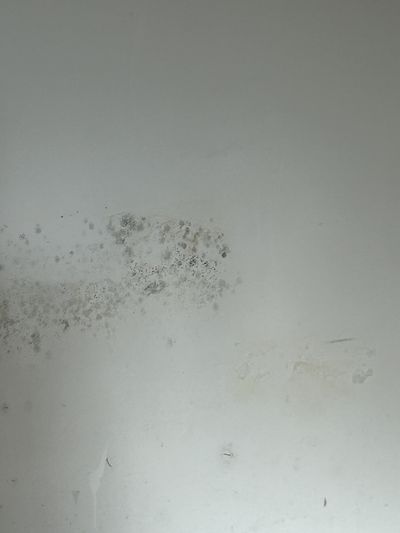
Surface mold is never a "quick clean and forget" situation. If mold is growing visibly on drywall, moisture is actively feeding it. You can wipe it off with a mold-killing solution, but without addressing the underlying water intrusion, it will return within days or weeks. The priority is finding and stopping the moisture source.
How does mold grow behind walls where you can't see it?
This is the scenario that keeps me, and every professional mold inspector, awake at night. Water intrusion happens. A window leaks. A roof fails in a localized spot. A plumbing line ruptures. The water soaks into drywall and insulation on the backside of the wall, where no one can see it. Meanwhile, mold colonizes on the drywall backing and on the framing wood behind the finish wall. Months or years pass before the problem is discovered, often only when the drywall is opened for an unrelated repair, or when air quality testing reveals spore contamination.
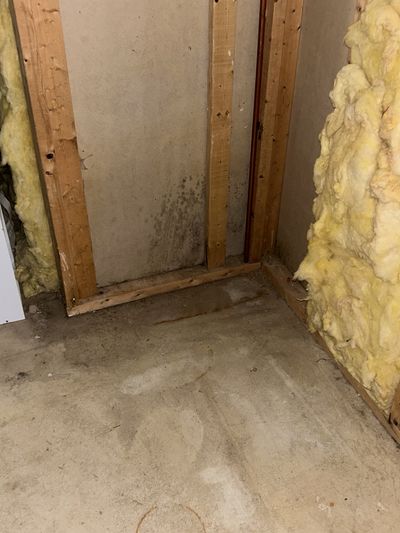
Insulation is a particular culprit. Fiberglass batts trap moisture against concrete or masonry. If the wall gets wet, from a leak, from condensation, from water wicking up the foundation, the mold grows on the back of the drywall and on the insulation itself. The homeowner smells nothing unusual (odor accumulates over time), sees nothing (it's behind the wall), and the problem spreads silently until air testing or structural investigation reveals it.
This is why I recommend professional mold air testing after any significant water event, and why dehumidification and moisture monitoring in the days and weeks following water intrusion are so critical.
Why does the 24-hour rule matter so much for mold prevention after water damage?
The EPA's guidance is clear: dry water-damaged areas and items within 24 to 48 hours to prevent mold growth. This isn't an arbitrary deadline.
The steps below cover what to do immediately after water damage:
- Document everything. Take photos and video of the water damage. You'll need this for insurance claims and to track the timeline of the event.
- Run dehumidifiers and fans immediately. Move air and remove moisture. Dehumidifiers should run continuously until humidity drops to 50% or below.
- Remove wet materials. Wet carpet, padding, insulation, and drywall should be removed and disposed of within the first 24–48 hours. These materials are food for mold.
- Check hidden spaces. Look behind walls, in crawl spaces, and in attic areas above the water source. Moisture spreads.
- Monitor for odors. A musty smell is a sign of active mold growth. If you smell it within the first week, mold is already colonizing.
- Schedule professional testing within two weeks. Even if you don't see visible mold, air and surface testing will tell you whether spore levels have elevated and where moisture may still be hiding.
Do not skip these steps thinking "it'll dry out on its own." Heat and air circulation dry surfaces, but moisture can remain trapped in wall cavities, under flooring, and in insulation for months. Mold thrives in that hidden moisture long after the visible water is gone.
How does professional mold testing help after water damage?
Testing tells you whether the water left an active mold problem behind, and where it is hiding. There are two primary forms. Air sampling measures airborne spore concentrations against an outdoor baseline, so elevated indoor counts point to a hidden source. Surface sampling swabs a suspect area to confirm exactly which species are growing.
Air sampling uses a pump to draw a measured volume of air through a collection device, capturing mold spores present in the air. The sample is analyzed under a microscope to count spore types and concentrations. The key: air samples are compared to outdoor baselines. If your indoor spore count is significantly higher than outdoor levels, or if you see spore types that aren't common outdoors, that indicates a mold source inside the home.
Surface sampling involves swabbing or tape-lifting a suspect area (visible mold, damp insulation, stained drywall) and analyzing the sample. This tells you exactly what mold species are present and their concentration. It's the most direct evidence of active mold colonies.
I personally oversee all testing through a PRO-LAB certified laboratory. Certified testing eliminates guesswork and gives homeowners and buyers a clear, defensible picture of the mold situation. If testing reveals elevated levels, we know a water management issue exists.
What is the most important lesson about water damage and mold prevention?
Water damage doesn't have to result in mold, but only if you respond immediately and thoroughly. The window to prevent mold colonization is 24–48 hours. Miss that window, and you're managing a mold problem, not preventing one.
For homeowners: if you experience water intrusion, a roof leak, a pipe burst, a flooded basement during a storm, treat it as an emergency. Dehumidify, remove wet materials, and get professional testing to confirm whether mold has begun growing before you can see or smell it.
For buyers: if you're purchasing an older home anywhere from Philadelphia out to Norristown, ask your inspector to look closely at the basement, crawl space, rim joist, and window trim for signs of past or present moisture. These findings inform your decision and your negotiation. And if the inspector's report mentions any evidence of water damage, don't skip mold testing. The investment in air and surface sampling is cheap insurance.
Questions about water damage, mold, or moisture testing in your home? Give me a call. This is the work I know best, and I personally oversee every inspection and testing protocol.
Concerned About Water Damage or Mold?
All Seasons provides both home inspections and PRO-LAB certified mold testing across the Philadelphia region. Call 610-348-6728 for a free estimate.
Mold Testing After Water Damage, Serving These Areas:
Philadelphia Norristown Cheltenham Upper Darby Ardmore Abington Conshohocken