In May 2026, I inspected an 80-year-old, 3-story row home in Germantown, Philadelphia 19144 for a buyer under contract. The home was rated Fair condition overall, which on a house this age means there's real work ahead, but also that the structure has survived eight decades and has something worth working with.
Fair condition, though, doesn't tell you the details. The details are what matter. This inspection turned up seven findings, listed here in order of most serious to most manageable.
1. Termite Shelter Tubes in the Basement Joists
The first thing I flag in any older Germantown basement is the underside of the first-floor joists, working from the perimeter inward. In this home, I found active-looking termite shelter tubes, the mud-colored tunnels subterranean termites build to travel from soil contact points up to the wood above, shielded from the open air.
Termite shelter tubes are easy to miss if you're walking through and looking generally. They are not easy to miss if you know what to look for and you check methodically. The tubes on these joists suggested active or recent subterranean termite activity.
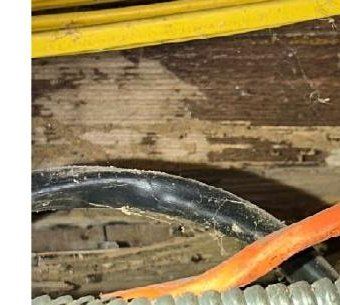
Finding shelter tubes triggers two separate calls: a licensed termite inspection and treatment, and a structural evaluation of the affected joists by a contractor to determine whether the wood has been compromised. The tubes themselves don't tell you the extent of damage inside the wood. That takes a closer look.
2. Open, Uncapped Gas Pipe
An uncapped gas supply pipe in the basement (no cap, no valve, open pipe end). If gas service is active to that line, this is an immediate life-safety hazard. Gas accumulation in a partially enclosed basement can reach ignition concentrations faster than most people expect.
This finding goes into the report as an item requiring a licensed plumber to evaluate and cap or valve the pipe, followed by utility notification. It is not a price-negotiation item. It is not a "buyer's credit" item. It is a condition of safe occupancy. The pipe gets addressed before anyone moves in, not as part of a punch list.
3. Active Water Infiltration and Sewage at the Cleanout
The main sanitary cleanout in the basement showed evidence of a sewage leak, not historical staining, but active evidence of a drain failure at the cleanout fitting. Combined with active water infiltration through the basement masonry, this basement was dealing with two separate moisture sources simultaneously: groundwater from outside, and sanitary waste from within the drain system.
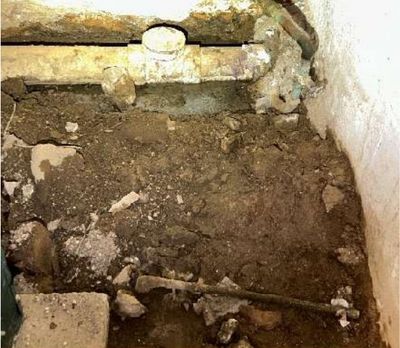
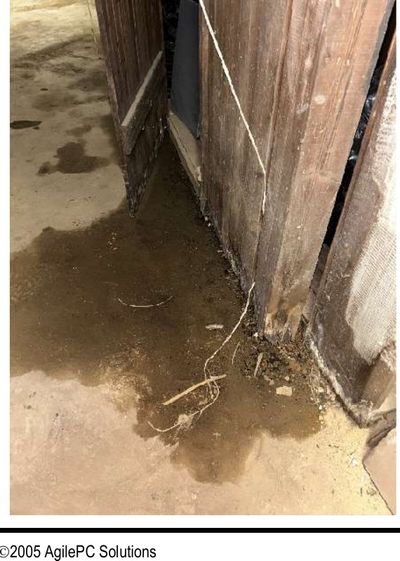
A sewage leak at the cleanout is a health risk (raw sewage in a living space) and a structural risk (prolonged moisture exposure to the floor joists above). It's also a licensed plumber call, not a DIY project.
4. Asbestos Wrap on Abandoned Basement Ductwork
The basement contained what appeared to be abandoned ductwork (no longer connected to any active HVAC system) wrapped in asbestos insulation. Pre-1978 duct wrap insulation very commonly contains asbestos; on a home built in the 1940s, this is expected.
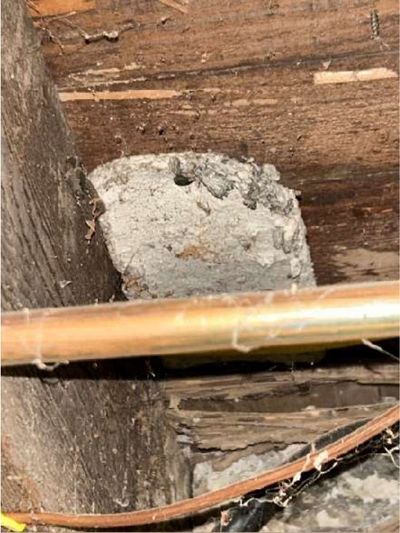
Intact asbestos insulation in a stable, undisturbed location is generally managed in place rather than removed. The risk comes from disturbing it. Before any work in that basement area (HVAC replacement, renovation, joist repair), the asbestos needs to be evaluated and, if necessary, abated by a licensed contractor. The buyer's contractor doing the joist work cannot simply cut around that duct wrap.
5. Standing Water on the Flat Roof Section
A flat roof section at the rear of the home showed visible standing water and a deteriorated membrane. Standing water on a flat roof tells you a few things at once: the membrane has lost its positive drainage slope (if it ever had one), the drain or scupper is blocked or undersized, and the membrane beneath the water is aging at an accelerated rate. Water pooling on a flat roof eventually wins. Membranes fail, and when they do, the first sign you get inside is often a ceiling stain in a bedroom below.
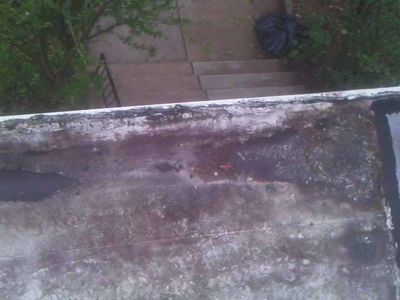
A deteriorated flat roof membrane with standing water is a replacement budget item, not a maintenance item. Coatings and patching can extend the life of a membrane in good condition; they cannot reverse a membrane that has reached end of service life.
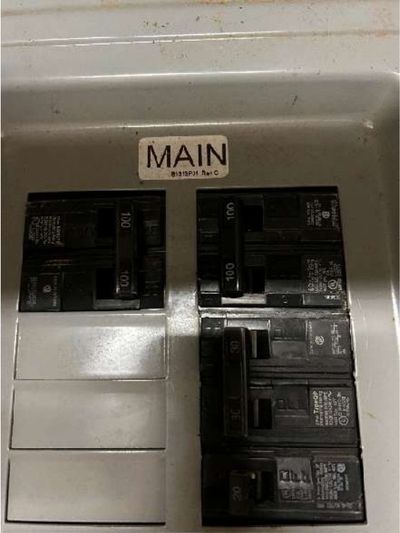
6. Two 100-Amp Main Breakers Instead of One 200-Amp Service
The main electrical panel on the third floor contained two 100-amp main breakers, a configuration sometimes done when homes were upgraded from older service sizes. Two 100-amp services give you 200 amps of theoretical capacity, but they are not the electrical equivalent of a single 200-amp service. Modern electrical loads (EV chargers, heat pumps, modern kitchen appliances) are sized for single-service 200-amp feeds. A licensed electrician needed to evaluate whether the current configuration met code and whether upgrading to a true single-service 200-amp entry was warranted.
7. Active Mold Risk from Combined Moisture Sources
With active water infiltration, a sewage leak, and evidence of moisture throughout the basement, the conditions for mold growth were explicitly present. The report flagged mold risk and recommended a mold assessment before closing. Multiple simultaneous moisture sources in an 80-year-old basement with original wood framing above is not a situation where you assume the wood is fine. It's a situation where you verify.
What Buyers in Germantown Should Know About Pre-War Homes
Every finding listed above is findable, and every one of them is priceable. Termite treatment: known cost range. Gas pipe cap: licensed plumber, known cost. Sewage cleanout repair: plumber, known cost. Asbestos abatement if disturbed: licensed abatement, known cost. Flat roof replacement: roofing contractor, known cost. Electrical service evaluation: electrician, known cost.
What is not priceable is the unknown: findings that weren't in the report because the inspector didn't check. Buyers in Germantown and the broader pre-war Philadelphia housing stock, including the older rows of Cheltenham and Upper Darby, are well served by an inspector who spends 3-4 hours at the house, checks every accessible basement joist, opens the panel, traces every gas line, and walks the roof rather than viewing it from the sidewalk.
The findings in this inspection were not hiding. They were waiting for someone to look.
Bob Klebanoff
Owner, All Seasons Home Inspections
610-348-6728 | Free Estimate
Home Inspections in Philadelphia and the Surrounding Area:
Germantown Philadelphia Northeast Philadelphia Norristown Upper Darby Cheltenham