In May 2026, I inspected a three-story mixed-use storefront rowhouse on Girard Avenue in Northern Liberties, in Philadelphia County. The building was about 100 years old, with ground-floor commercial space and residential units above, and it had a reported new roof and a fresh chimney cap. It showed the kind of surface improvements a buyer likes to see.
But a fresh cap and a reported new roof can sit directly above 100-year-old masonry, an undersized electrical service, and gas appliances sharing a single flue. Here is what this inspection found, and why an old Girard Avenue storefront deserves a whole-building look rather than a glance at the recent upgrades.
1. An Undersized 60-Amp Main Service on a Three-Story Mixed-Use Building
The entire building was served by a single double-pole 60-amp main. For a modern single-family home that is undersized. For a three-story building with commercial space on the ground floor and residences above, it is well short of what the building needs to run safely and legally.
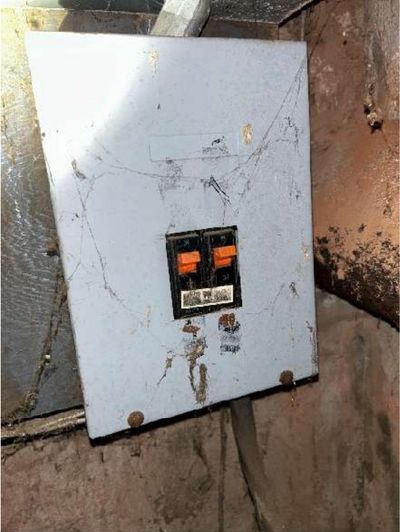
A 60-amp service limits what can run at once and usually leaves no room to add circuits for modern loads. On a building this old it often points to aging wiring behind it as well. A home inspection documents the service size and condition, and the right step here is an electrician's evaluation and almost certainly a service upgrade, plus confirmation that the service is adequate and legal for the intended commercial and residential use.
2. Multiple Gas Appliances Sharing One Flue, an Unsecured Furnace Vent, and Deteriorated Chimney Masonry
This is the carbon monoxide story of the inspection. Multiple gas appliances were venting into one shared flue, the furnace vent connector was not secured, and the masonry at the base of the chimney was deteriorated. Any one of those is a venting concern. Together they are a reason to stop and have the heating system evaluated before anyone lives in the building.
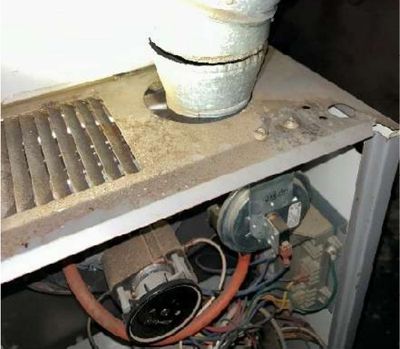
Gas appliances produce carbon monoxide, and the flue is what carries that exhaust out of the building. When the flue is shared, the connectors are loose, and the masonry is breaking down, exhaust can escape where it should not. Carbon monoxide is colorless and odorless, so you cannot rely on noticing it. The correct response is evaluation by a qualified heating contractor, working carbon monoxide detectors on every level, and repair of the venting and chimney base before occupancy.
3. A Shifting, Blistered Front Stucco Facade
The front stucco facade was blistering and shifting, including a section above the second-floor window that had moved away from the wall behind it. On a 100-year-old masonry building, stucco that is separating and shifting is not just cosmetic. It can let water into the wall and, where a section is moving, it needs to be evaluated for how it is attached.
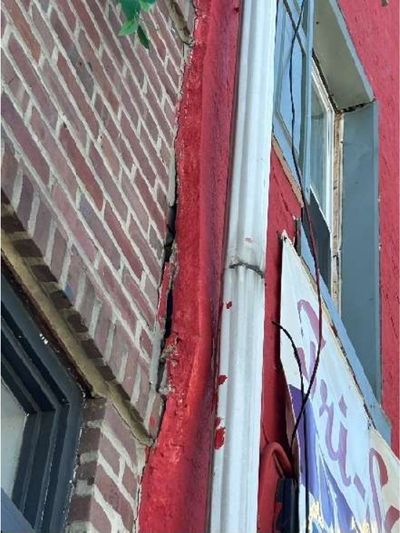
Facade work on an old three-story storefront is not a small item, and a shifting section over a window is the kind of thing you want documented and priced before closing rather than discovered after. It was flagged for evaluation and repair.
4. Corroded Steel Walkout Doors Over Rotted Stairs With No Handrail
The basement had an exterior walkout, and it was a fall hazard on more than one front. The steel walkout doors were corroded, the wood stairs below them were rotted, and there was no handrail. There was also evidence of past water infiltration coming in through the walkout.
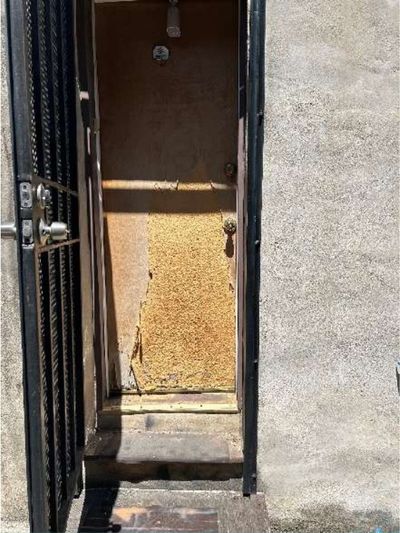
Rotted stairs with no handrail are a straightforward safety repair, and a corroded walkout that lets water in is a moisture problem that feeds everything below it. Both were documented so the buyer could plan the repair to the doors, the stairs, and the water path together rather than one at a time.
5. A Corroded Water Heater at End of Life and a First-Floor Supply Leak
The electric water heater was corroded and sitting at the end of its service life, with rust staining at the base and the block it stood on. Separately, there was a leak on a supply line serving the first-floor bathroom.
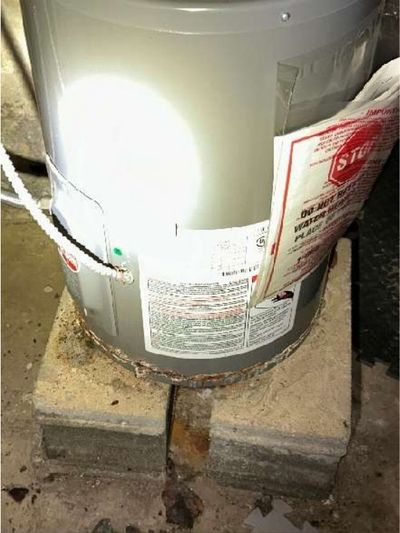
A corroded water heater is a plan-for-it replacement, and a supply-line leak is the kind of small active problem that does slow, hidden damage until it is fixed. Neither is dramatic on its own, but both belong on the buyer's list of what the building needs.
6. An Improperly Installed, Non-Operational Sump Pump and an Abandoned Oil Tank
The basement had a sump pump that was improperly installed and, when tested, was reported not operational. A sump that does not run is not managing water, which matters in a basement that already showed evidence of past water coming in through the walkout. The basement also held a large abandoned oil tank.
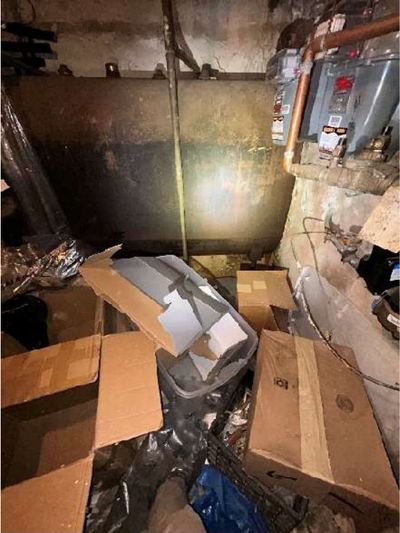
An abandoned oil tank left in a basement is worth resolving so it is not a future liability, and a non-operational sump pump needs to be repaired or replaced so the basement actually has working water management. In a building with a history of water at the walkout, a working sump is not optional.
7. Water Stains Across Multiple Ceilings, With One Flagged as Possible Mold
There were water stains on ceilings across multiple floors. Encouragingly, they measured dry at the time of inspection, which means the sources may not have been active. But one discoloration had the color and texture consistent with possible mold, and that one was flagged for testing.
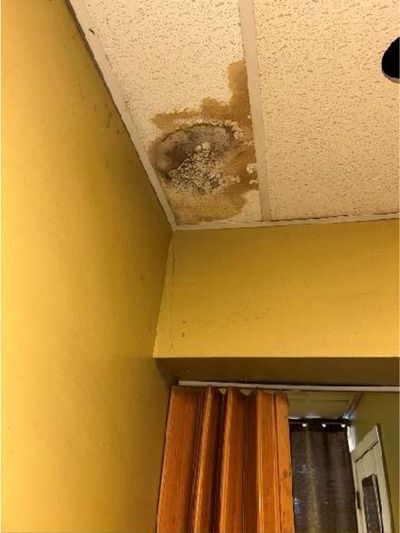
A dry stain is a good sign, but discoloration that looks like mold is a reason to test rather than assume. Air sampling identifies whether airborne spore concentrations are elevated and which mold types are present. On a building with a shared flue, an old roof structure, and a history of water at the walkout, confirming what the stains are before closing is worth the small cost of a test.
What Buyers Should Expect From Home Inspections in Northern Liberties
This inspection found an undersized service, a shared-flue carbon monoxide concern, a shifting facade, a hazardous walkout, a corroded water heater, a dead sump pump next to an abandoned oil tank, and ceiling stains with possible mold, on a building that presented well with a reported new roof and a fresh chimney cap. That is not a bad building. It is a normal 100-year-old Girard Avenue storefront, and the findings are what a century of use and a mixed-use conversion tend to leave behind.
What makes an inspection here different is that the recent, visible upgrades sit on top of the systems that actually matter. In Fishtown, Fairmount, and Northern Liberties, these old storefronts are being bought and converted constantly, and a fresh cap and new membrane can distract from a 60-amp service, a shared flue, and deteriorated masonry underneath. Knowing to look past the upgrades comes from having inspected a lot of these buildings.
If you are buying a home or a mixed-use storefront in Northern Liberties or the rest of Philadelphia, schedule an inspection with All Seasons. I personally perform every inspection, and I know these old Girard Avenue buildings.
Bob Klebanoff
Owner, All Seasons Home Inspections
610-348-6728 | Free Estimate
Home Inspections in Northern Liberties and the Surrounding Area:
Northern Liberties Fishtown Fairmount Philadelphia