In August 2026, I was asked to test a basement at a home in Haddon Township, in Camden County. There was water infiltration and discoloration on the basement walls, along the stair framing, and across the ceiling joists. It was not subtle. The kind of staining that most owners notice and mean to deal with eventually.
What made this test worth writing up is the way the results ran against expectation. A swab of the most visibly discolored wall came back at minimal fungal growth, not the dramatic result the staining suggested. But the air samples, taken in the basement and in the HVAC central return duct, came back elevated for mold. That gap between a modest swab and an elevated air result is not a contradiction. It pointed to two conditions found on site that explain exactly how it happened.
1. What Was Found in the Basement
The basement showed water infiltration and discoloration across several surfaces, not one isolated spot. There was staining down a support column, and separate staining across the ceiling joists overhead. Older basements in this part of Haddon Township often carry this kind of spread-out moisture history, foundations poured close to the water table decades before modern waterproofing membranes were standard.
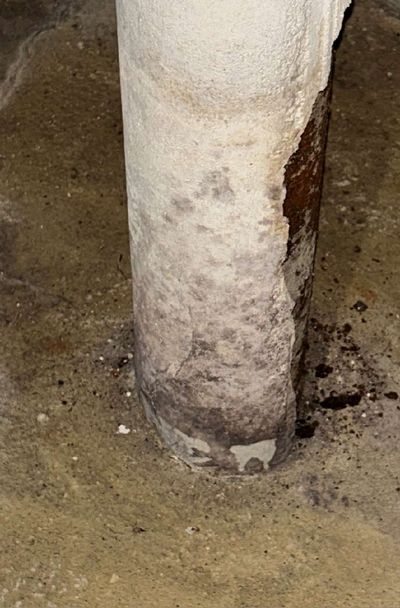
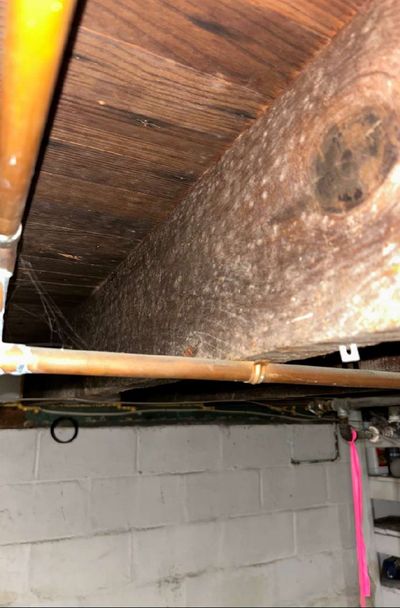
2. Mold Along the Framing and the Stair Stringer
Beyond staining, there was visible mold growth on the wood framing itself, including at the stair stringer near the foundation wall and on a ceiling joist further into the basement. Wood framing in a damp basement is exactly the kind of material mold colonizes, and finding it in more than one location in the same basement is consistent with a general moisture problem rather than one contained event.
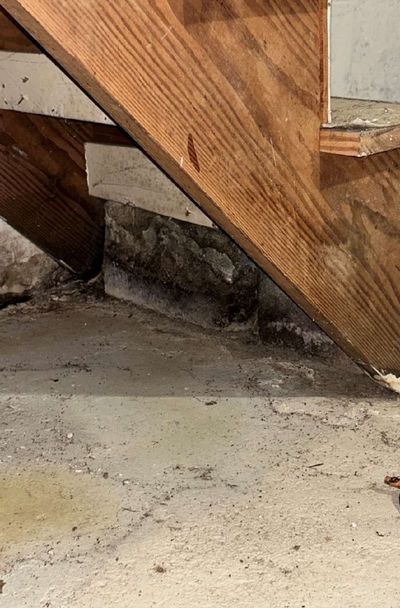
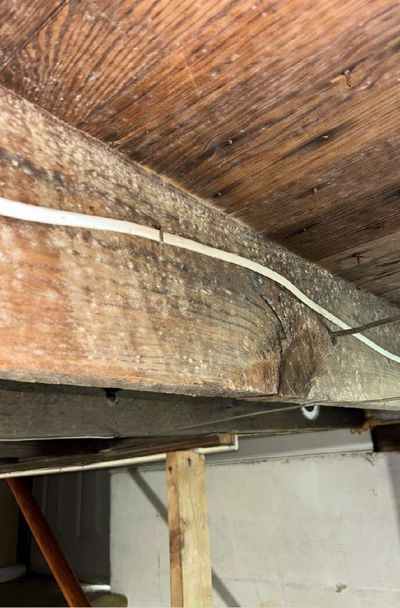
3. Air Grabs in the Basement and the HVAC Central Return
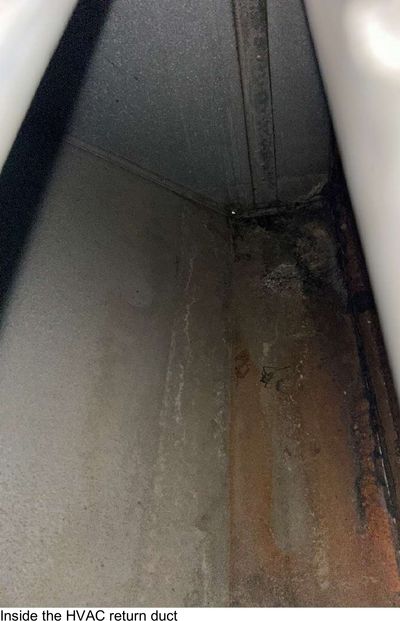
The samples taken on this job were an air grab in the basement, an air grab in the HVAC central return duct, and a swab of the discoloration on the basement wall. Sampling the central return matters because that duct pulls air from throughout the house and moves it through the HVAC system. If the basement air is affected, a return duct that is drawing from or passing through that space is a reasonable place to check whether the problem is reaching the rest of the home's air supply.
4. The Swab Came Back Minimal. The Air Came Back Elevated.
The swab of the basement wall discoloration came back at minimal fungal growth. On its own, that result reads as reassuring. But the air samples, both the basement grab and the HVAC return grab, came back elevated for mold. That combination is the whole point of testing air and surfaces together rather than relying on one or the other.
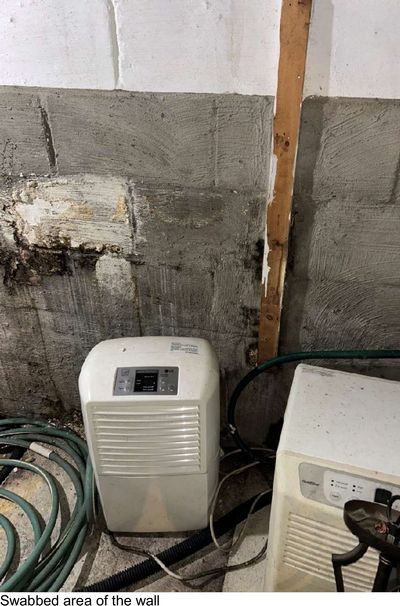
A swab tells you whether one specific spot is an active, dense colony. An air sample tells you what is actually circulating in the room, drawn from every surface at once, not just the patch under the swab. When the air is elevated but no single surface swab comes back dramatic, that usually means the mold source is distributed across the space, on multiple framing members and surfaces at lower levels, rather than concentrated in one visible colony a homeowner could point to. That matches what was found here: staining and growth spread across a column, ceiling joists, and stair framing, none of it necessarily the single worst spot, but adding up to elevated air.
5. A Sump Pump That Was Not Functioning
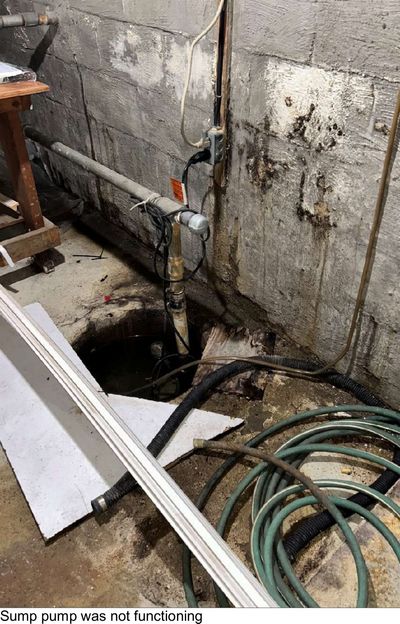
The sump pump in this basement was not functioning. A sump pump exists to remove groundwater and infiltration before it accumulates in the basement. Without it working, whatever water is entering the space, through the foundation, the soil, or storm runoff, has nowhere to go. It sits, it evaporates into the room air, and it keeps the surrounding framing and walls damp. This is the moisture driver behind everything else on this list. Staining on the column, the joists, and the stair framing, elevated mold in the air, none of it is surprising once you know the pump meant to remove water from the space was not doing its job.
6. An Open Vent Between the Basement and the First Floor
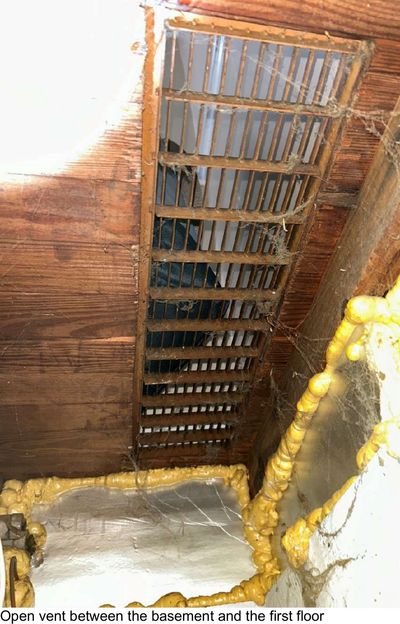
The second condition found on this job was an open vent connecting the basement directly to the first floor. Air does not stay confined to the room where it starts. A basement with active moisture and elevated mold in the air, sitting next to an open pathway to the living space above, gives that air a direct route upstairs. This is a big part of why the air grab result matters beyond the basement itself. It is not just a basement air quality question when there is an open connection carrying that air into the rest of the home.
Put together, a sump pump that was not functioning and an open vent to the floor above form a complete, unresolved chain. Moisture keeps entering and has no way out, that moisture feeds the widespread staining and framing growth in the basement, the air in that basement tests elevated, and an open pathway carries that air upstairs. The report recommended having a qualified mold remediator further evaluate and remediate the water infiltration, along with keeping vents clean, increasing humidity control and HEPA filtration in occupied rooms, keeping gutters and downspouts clean and aligned, maintaining positive grade around the foundation, and trimming vegetation back from the exterior walls.
What Haddon Township Homeowners Should Know About Mold Testing
The lesson from this basement is not that every stained wall is going to test elevated, or that every elevated air sample means a dramatic surface colony is hiding somewhere. It is that a swab and an air sample answer different questions, and you need both to know what is really going on. This basement's most visible discoloration swabbed at minimal fungal growth. The air told the fuller story, and two conditions on site, a non-functioning sump pump and an open vent to the first floor, explained exactly how an elevated air result and a modest swab result could both be true at the same time.
Haddon Township and the surrounding Collingswood, Haddonfield, and Cherry Hill communities carry a lot of older housing stock with basements that were finished, re-finished, and lived in across generations of owners, often without anyone checking what was happening behind the walls in between. If you have water infiltration, discoloration, or a musty smell in your basement, testing is the way to know for sure rather than assume. The air and swab samples are straightforward, and the report tells you exactly what you are dealing with before you spend a dollar on remediation.
If you want a basement tested, schedule a mold test with All Seasons. I personally perform every test and write every report.
Bob Klebanoff
Owner, All Seasons Home Inspections
610-348-6728 | Free Estimate
Mold Testing in Haddon Township and the Surrounding Area:
Haddon Township Collingswood Haddonfield Cherry Hill Pennsauken Woodbury Mount Laurel