In June 2026, I was asked to test a finished basement at a home on Haverford Road in Ardmore, on the Main Line. There was some discoloration and a handful of water stains on the basement walls. Nothing about it screamed emergency. It looked like the sort of ordinary basement wear that a lot of older homes carry without anyone thinking twice.
What made this test worth writing up is the gap between how the basement looked and what the lab found. A visual walk-through would have called it staining. The air sample and the surface swabs came back saying otherwise. This is a good, honest example of why air and swab testing tell you something a visual look cannot.
1. Damp Walls and Water Stains That Measured Wet
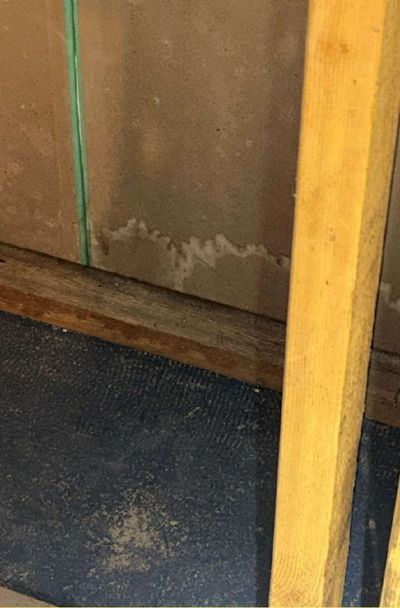
The first thing worth noting is that the discoloration on the basement walls was not all old and dry. When I checked the stained areas with a moisture meter, several of them measured damp. That matters, because a stain that is bone dry is often just a record of a past event, while a stain that is still damp means moisture is present now, and present moisture is what mold needs to keep growing.
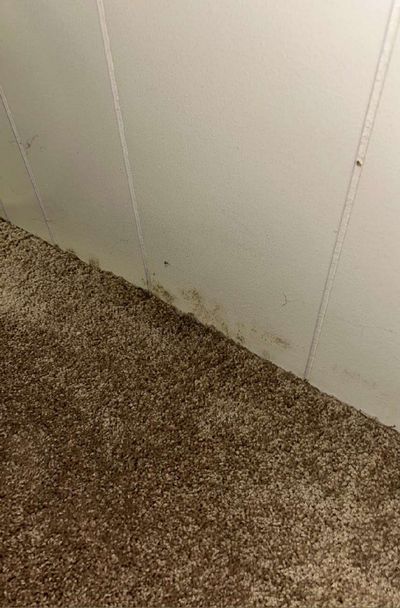
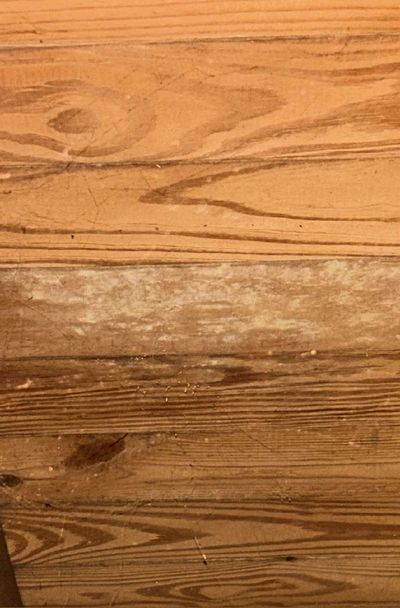
There was also discoloration lower down where the finished wall paneling met the carpet, the kind of dark line along the base of a wall that is easy to write off as dirt or scuffing.
2. Corrosion in the HVAC Central Return
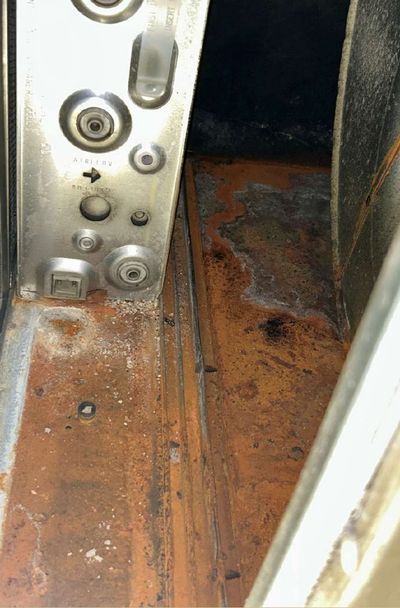
Along with the wall staining, there was corrosion in the HVAC central return. Rust and corrosion inside a return is a moisture story of its own, because a return that is pulling damp basement air, or that has had condensation or water sitting in it, both corrodes and moves whatever is in that air through the rest of the house.
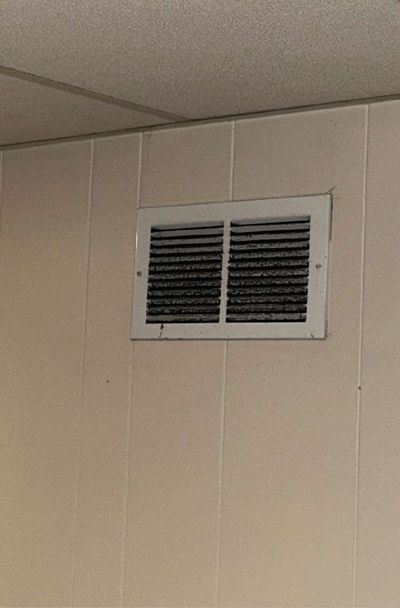
Because the return register was part of the same air path, it became one of the two spots chosen for a surface swab.
3. What Was Sampled, and Why Air and Swab Together
The customer asked for an air grab in the finished basement plus surface swabs on two spots: the basement wall paneling and the HVAC return register. That combination is deliberate. An air grab captures what is actually airborne in the room, the air people breathe when they are down there, and identifies which spore types are elevated. A surface swab measures whether one specific spot is an active growth site, and the lab grades it by how much fungal growth is present.
Neither test alone gives the full picture. Air tells you the room condition. Swabs tell you which surfaces are sources. Running both is how you separate a general air problem from a specific wall that is growing mold, and it is how you find out whether the HVAC return is a source or just downstream of one.
4. What the Lab Found: Elevated Chaetomium in the Air, High Fungal Growth on the Wall
The results came back clear. The air grab from the finished basement was elevated, with Chaetomium present. The swab of the basement wall paneling came back at high fungal growth. The swab of the HVAC return register came back as scattered spores with no growth.
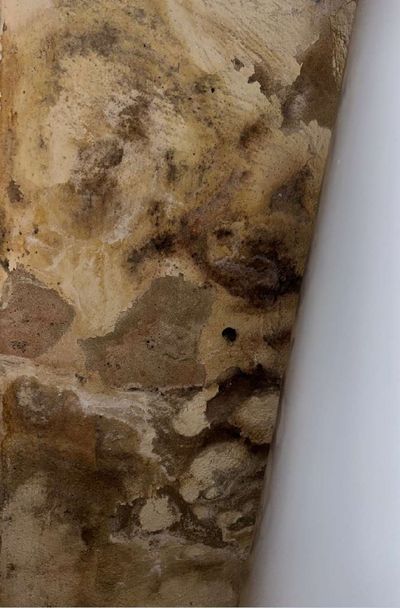
Read together, those three results form a consistent story. The wall paneling was an active source at high fungal growth. That source was affecting the room air, which is why the air grab came back elevated with Chaetomium. And the HVAC return register, while it was catching some settled spores, was not itself a colonized growth site, which is why it came back as scattered spores with no growth. Each sample confirmed the others.
5. What Chaetomium and High Fungal Growth Actually Mean
Chaetomium is treated as a water-damage indicator mold. Its spores are uncommon in outdoor air, so finding it elevated in an indoor air sample points to an indoor moisture source, not spores that blew in from outside. It grows on cellulose materials that stay wet: drywall, wood, wallpaper, and the paper and backing inside finished walls. That fits this basement exactly, where the wall paneling swab came back at high fungal growth and several wall areas measured damp.
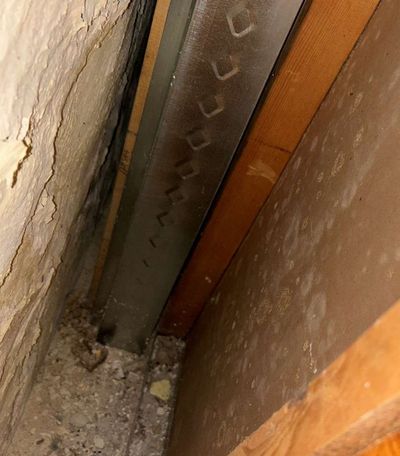
A high fungal growth grade on a surface swab means that spot is an active colony, not just a landing pad for a few drifting spores. On the health side, Chaetomium is associated with allergic and respiratory reactions in sensitive people, and can be a more serious concern for anyone who is immunocompromised. But the plain reading of these results does not require a health debate. Elevated Chaetomium in the air plus high fungal growth on the wall means there is a real, active mold source tied to real moisture, and it should be dealt with.
6. The Recommended Next Steps
Testing identifies and quantifies a problem. It does not remove it. That is a separate step. Based on these results, the report recommended having a qualified mold remediator further evaluate the basement, remove or encapsulate the mold, and remediate the water source so the growth does not simply return. The EPA guidance cited in the report is that any area of discoloration around three feet by three feet or larger should be professionally remediated.
Beyond the remediation itself, the moisture side has to be handled or the mold comes back. The practical recommendations were to keep the HVAC filter and ducts clean and the vents clean, add humidity control and HEPA filtration in the rooms used most, dehumidify through the warm months, keep gutters and downspouts clean and aligned, maintain a positive grade around the foundation and add drainage if needed, trim vegetation back from the exterior walls, and repair any plumbing leak or water infiltration within 24 hours. Mold is a moisture problem first. Fix the water and you take away what the mold lives on.
What Ardmore Homeowners Should Know About Mold Testing
The lesson from this Ardmore basement is not that every stained wall is hiding a mold problem. It is that you cannot tell the safe ones from the active ones by looking. This basement looked like ordinary staining. The moisture meter said several walls were still damp, the wall swab came back at high fungal growth, and the air grab came back elevated with Chaetomium, a mold that indoors usually points to a moisture source.
Ardmore and the surrounding Lower Merion communities are full of older homes with finished basements, and a finished basement is exactly where this kind of growth hides, behind the paneling, inside the wall cavity, in the return duct, out of sight. If you own or are buying a home in Ardmore, Haverford, or Bryn Mawr and you have discoloration, a musty smell, or any past water history in the basement, testing is the way to know for sure rather than assume. The air and swab samples are straightforward, and the report tells you exactly what you are dealing with before you spend a dollar on remediation.
If you want a basement tested, schedule a mold test with All Seasons. I personally perform every test and write every report.
Bob Klebanoff
Owner, All Seasons Home Inspections
610-348-6728 | Free Estimate