The June 2026 commercial mold inspection at a property in Perkasie, Bucks County is one of the most extensive mold cases we have documented. Mold was visible in multiple areas throughout the building. The testing scope included HVAC central return duct air grabs and swabs at multiple surface locations. PRO-LAB results confirmed Stachybotrys chartarum at multiple locations.
This case study covers what we found, what the photos show, and a finding that surprises many people: despite extensive visible Stachybotrys growth, the HVAC air sampling returned concentrations that were not elevated. Understanding why is important for anyone dealing with a similar situation.
Scope of Testing: Swabs and HVAC Air Grabs
The testing protocol at this property used two methods. First, swab samples were taken at multiple locations throughout the building where mold was visible on wall surfaces, baseboards, and structural elements. Each swab goes to PRO-LAB for microscopic species identification.
Second, air grab samples were collected from the HVAC central return ducts. HVAC air grabs sample the air being drawn into the system from the building — if mold spores are circulating through the building's air, the return duct is where they concentrate. If the HVAC system is distributing spores from a mold source, the return duct sample will typically show elevated counts.
The Finding: Stachybotrys at Multiple Locations
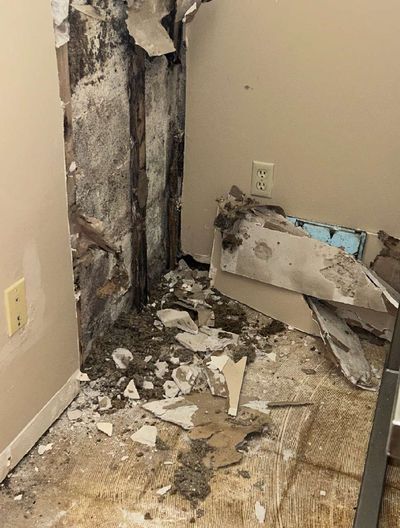
The swab results confirmed Stachybotrys chartarum at multiple locations. The photos document what the visual assessment found before and during the inspection. In one of the most affected wall sections, drywall removal had already exposed the full extent of mold growth on the structural wood framing — black coverage across the studs and into the surrounding material.
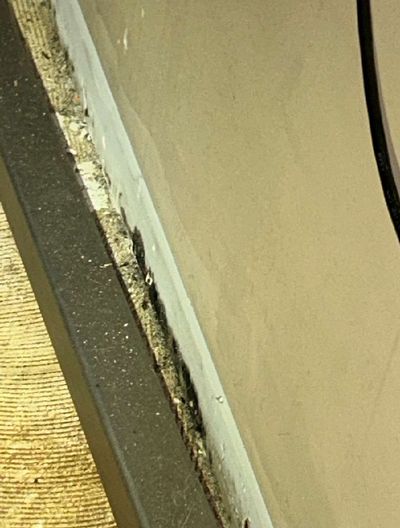
Floor and Surface Damage Throughout the Building
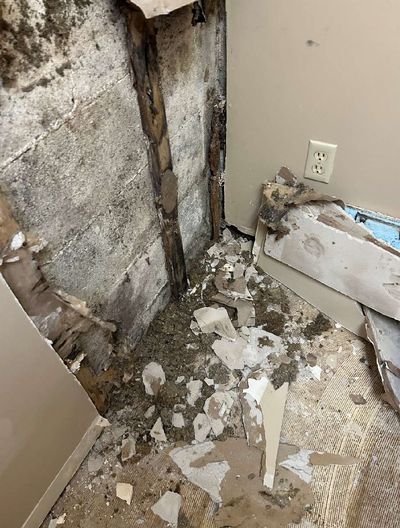
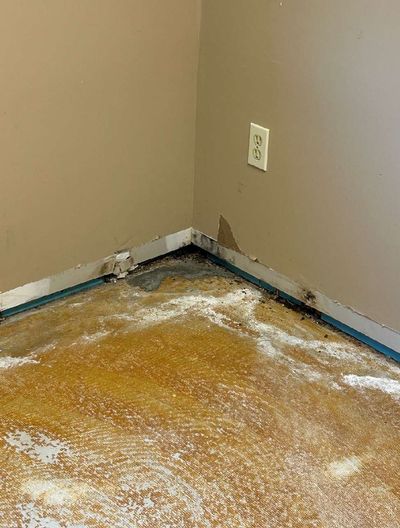
The Crawl Space: The Most Severe Finding
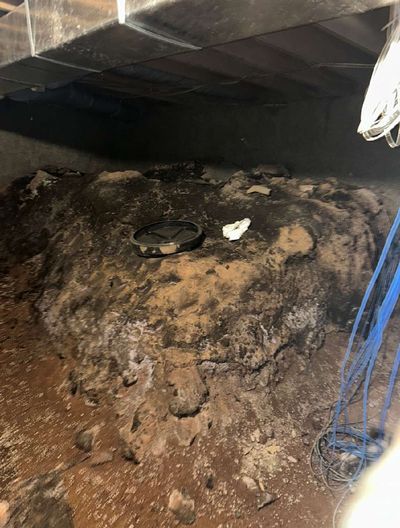
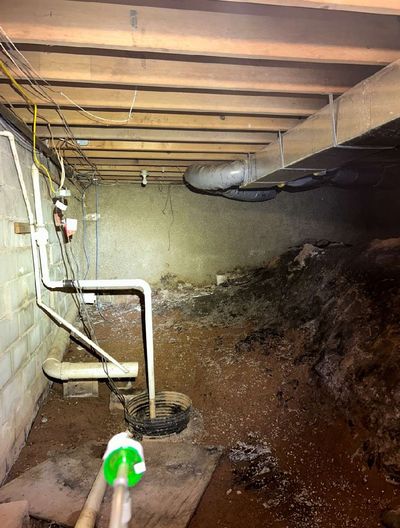
The Counterintuitive Air Result: Why Low Air Counts Do Not Mean No Problem
The HVAC return duct air grab samples did not show elevated mold concentrations despite the extensive visible growth throughout the building. For many people, this seems contradictory — if mold is everywhere, why is the air not full of spores?
The answer is in what Stachybotrys is. Unlike dry, powdery molds such as Cladosporium or Aspergillus that readily become airborne when disturbed, Stachybotrys is a wet, slimy mold. Its spores require moisture to move. In an intact, undisturbed space, Stachybotrys tends to stay on the surfaces where it grows. The low air count in the return duct is consistent with a building that had not yet been actively disturbed by remediation work.
This does not mean the mold is harmless or that air clearance is unnecessary. Stachybotrys produces mycotoxins that are hazardous both through inhalation and through physical contact with contaminated surfaces. Any remediation work will disturb the colonies and release spores into the air — which is exactly why proper containment, HEPA filtration, and appropriate PPE are required during the work. The low pre-remediation air count would almost certainly change the moment a contractor begins cutting out drywall without containment.
Post-remediation clearance sampling — air testing after the work is complete — is the confirmation that remediation was successful.
What Commercial Remediation at This Scale Requires
When Stachybotrys is confirmed at multiple locations throughout a commercial building with this level of structural involvement, remediation is not a cleaning job. It requires:
- Full isolation and containment of affected work zones
- Professional HEPA air filtration running continuously during work
- Licensed mold remediation contractors with appropriate PPE (respirators rated for mold, disposable suits)
- Controlled removal and proper disposal of all mold-affected materials — drywall, insulation, carpet, affected structural elements
- Treatment of remaining surfaces per EPA guidelines
- Root-cause repair of the moisture source before any rebuilding
- Post-remediation clearance sampling by an independent tester before reoccupancy
The clearance sampling step is the one most commonly skipped and the most important to insist on. A remediation contractor saying the job is done is not the same as an independent test confirming spore concentrations have returned to normal outdoor-comparable levels. The two are not interchangeable.
Commercial Mold Testing in Bucks County and the Philadelphia Region
All Seasons performs commercial mold testing throughout Perkasie, Doylestown, Quakertown, and across Bucks and Montgomery Counties. The PRO-LAB certified testing process is the same for commercial properties as for residential — swab sampling for species identification, spore trap air sampling for airborne concentrations, and HVAC air grabs where indicated. Written report with interpretations delivered after lab results are received.
Bob Oberholtzer
Owner, All Seasons Home Inspections
610-348-6728 | Free Estimate
Mold Testing in Bucks and Montgomery Counties:
Perkasie Doylestown Quakertown Sellersville Hatfield Lansdale Ambler