In September 2026, I was called out to a commercial building in Pottstown, Montgomery County, Pennsylvania. Active water infiltration was coming through the ceiling in more than one location, and mold was already visible on the ceiling tile and on the HVAC registers and ducts running throughout the building. The property manager did not need me to confirm that something was wrong. What they needed was the scope: how many places this was actually happening, what was growing, and whether the ventilation system was moving it around.
This case study walks through what the testing found. The short version is that active leaks were affecting multiple locations, mold was present on ceiling tile and on registers and ducts throughout the building, and lab results confirmed elevated mold in the storage area air sample along with active fungal growth on multiple swab samples. The longer and more useful version is why testing in several locations, rather than one, is what a commercial building like this actually requires.
1. Active Water Infiltration in Multiple Ceiling Locations
The building had active water coming through the ceiling in more than one area at the time of testing. This was not old staining left over from a leak that had already been fixed. It was current, ongoing water infiltration, which is the detail that determines what happens next. A leak that is still active means any mold growing beneath it will keep coming back until the water is stopped, no matter how thoroughly the visible growth is cleaned up.
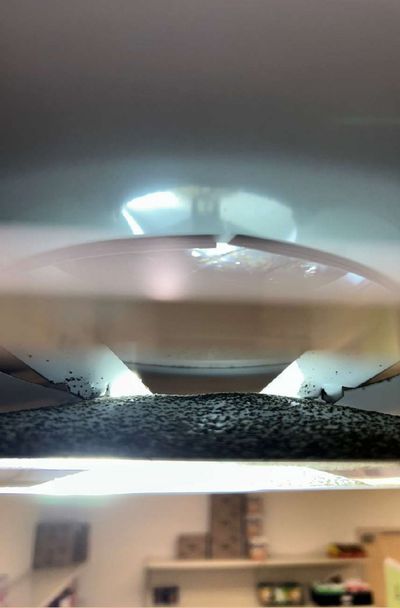
For a commercial property, active water infiltration at more than one point signals a building-wide roof or ceiling condition, not an isolated repair. That is part of why the sampling plan for this job covered several locations instead of one.
2. Mold on the Ceiling Tile Throughout the Building
Mold was present on ceiling tile in more than one area, tracking with the locations where active water was coming through. Ceiling tile absorbs moisture readily, and once it stays damp it becomes a growth surface, and a visible one, since it sits at eye level for anyone looking up in an occupied room.
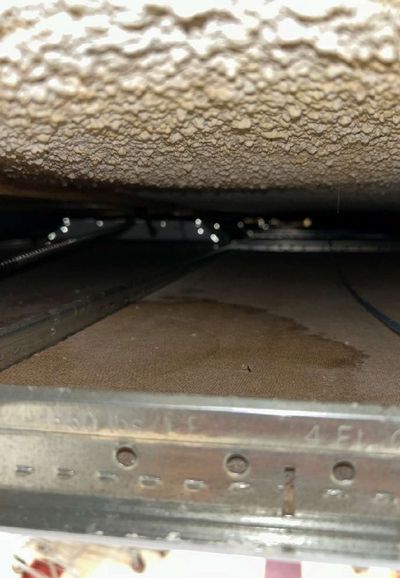
Mold on ceiling tile in a commercial space is not just cosmetic. Tile that has been colonized needs to be removed and replaced as part of remediation, not cleaned in place, because the material itself has absorbed the moisture and the growth throughout its structure.
3. Mold on the Ductwork Above the Ceiling
Above the tile line, mold was also present directly on the ductwork running through the ceiling space. Where water had reached the duct surfaces, dark growth had established along the metal and along the sealed seams, the same pattern as the tile below it, driven by the same active leaks.
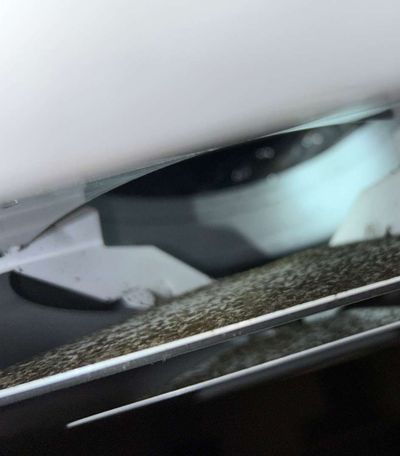
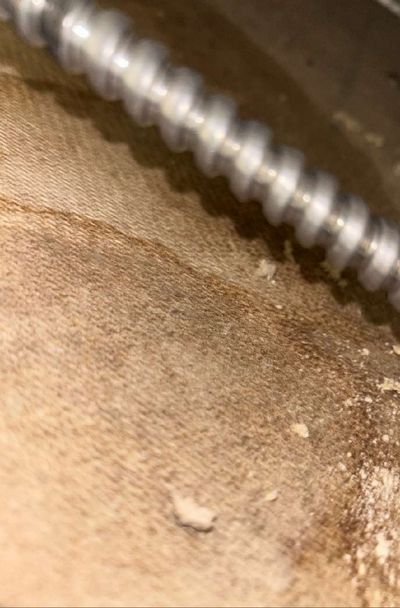
Duct surfaces and insulation are harder to see than a stained ceiling tile, which is exactly why they get missed on a quick visual walk-through. Testing the ceiling space directly, rather than relying on what shows through the tile from below, is how this was caught.
4. The Ceiling Plenum: Why This Matters for the HVAC System
In a commercial building like this one, the space above the suspended ceiling is typically used as a return air plenum, meaning the HVAC system draws air from that space rather than through a fully ducted return path. That detail changes what mold in the ceiling means. It is not sealed off from the occupied rooms below. It sits directly in the path of air the system pulls in and recirculates.
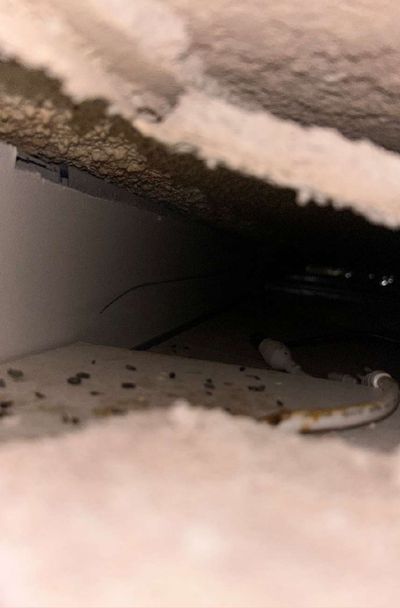
This is the reason testing multiple locations in a commercial building matters more than it does in a typical house. A return air plenum with mold on the tile and duct surfaces running through it is a distribution mechanism, and a single sample near one register would not have shown how far the contamination actually reached. If you manage a property where you are not sure whether the space above your ceiling functions this way, our commercial mold and air quality testing service is built to answer that question directly.
5. Mold on Flexible Duct and the Return Grille
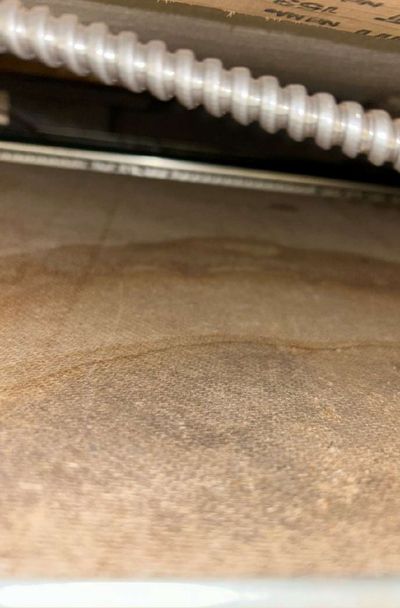
The flexible duct runs in the same ceiling space also showed staining and growth on the insulation jacket, and the HVAC return grille itself, visible from inside the occupied space, showed heavy soiling consistent with air moving through a contaminated plenum rather than a clean return path.
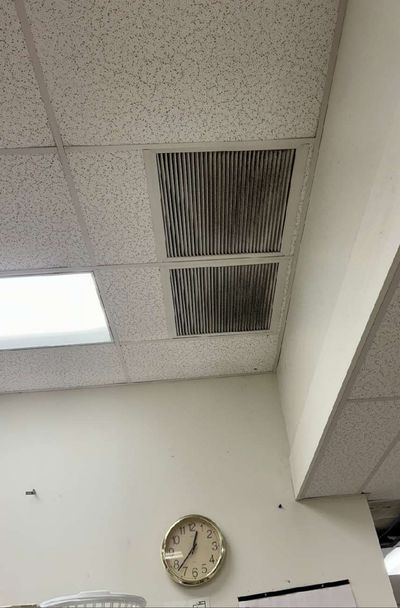
Registers and grilles are usually the only part of a plenum-return system anyone in the building actually sees. When they show visible soiling, it is a sign worth taking seriously, because it means the air moving into occupied space has been in contact with whatever is growing above the ceiling.
6. Testing at Multiple Locations: Air Grabs and Swab Results
Two testing methods were used, and both were run at multiple locations rather than a single point. Air grab samples measure what is actually suspended in the room air at the moment of sampling. Swab samples are taken directly from a surface where growth is visible, and each swab goes to PRO-LAB for identification of the mold present and whether it is actively growing.
The storage area air sample came back elevated, meaning the spore count in that room's air was above what is expected for a normal indoor environment. Swab samples taken at multiple locations came back showing active fungal growth, not old or dormant spores, but mold that was actively colonizing the surfaces it was taken from. Together, an elevated air result in one room and active growth confirmed at several points is what tells you this is a live, spreading condition rather than a single contained spot.
7. What the Lab Confirmed and the Recommended Next Steps
My report recommended having a qualified contractor further evaluate the building and remediate both the active water infiltration and the mold, to reduce the risk of a health hazard. The order matters. Stopping the active leaks has to come first, because mold remediated while the water is still coming in will simply return in the same locations.
Beyond stopping the water, the report addressed ongoing conditions that keep a building like this dry: keep HVAC vents and ducts clean, add humidity control and HEPA filtration in occupied rooms, keep gutters and downspouts clean and properly aligned, maintain positive grade around the foundation, and trim vegetation back from the exterior walls. Because this building stays open for business, occupant exposure during operating hours is a real, ongoing concern until the leaks are fixed and the affected ceiling tile, ductwork, and registers are properly remediated, not just cleaned in place.
What Pottstown Commercial Property Owners Should Know About Mold Testing
This building in Pottstown is a clear example of why testing at multiple locations is worth doing even when mold is already visible in one spot. Seeing mold on a ceiling tile tells you there is a problem. Testing tells you how far it has spread, whether the HVAC system is part of how it is moving through the building, and whether the water causing it is still active. Those answers let an owner scope remediation accurately instead of paying to clean up one room while the same leak keeps feeding growth somewhere else.
It also protects the owner. A commercial building with active water infiltration, mold confirmed on ceiling tile and ductwork throughout, and lab-confirmed elevated air and active fungal growth is a documented condition with real occupant-exposure implications. Having a written, independent report from a certified tester is exactly what an owner wants on file before, during, and after remediation. If you own or manage a commercial property in Pottstown, Limerick, Collegeville, or the surrounding Montgomery County area and you have visible mold, an active leak, or an HVAC system you are worried about, testing is the first move.
Bob Klebanoff
Owner, All Seasons Home Inspections
610-348-6728 | Free Estimate
Mold Testing in Pottstown and the Surrounding Area:
Pottstown Limerick Royersford Collegeville Phoenixville Trappe Schwenksville