In May 2026, I performed a mold test at a commercial office in Silverdale, in Bucks County, Pennsylvania. The building had a history of water leaks in a back office and its closet, traced to a malfunction with the HVAC condensate drain. The owner wanted to know whether the leaks had left a mold problem behind. This is what the testing found.
This one is a useful case study because the two test methods gave two different answers, and both of them mattered. Here is how that works.
1. Past Water Leaks From the HVAC Condensate Drain
The moisture source was already known: past water leaks in the back right office and its closet, caused by a malfunction in the HVAC condensate drain. An air conditioning system pulls humidity out of the air and drains that water through a condensate line, and when that line clogs or the pan overflows, the water ends up on the floor instead of going away. In this office it had wet the closet floor, which I confirmed with a moisture meter.
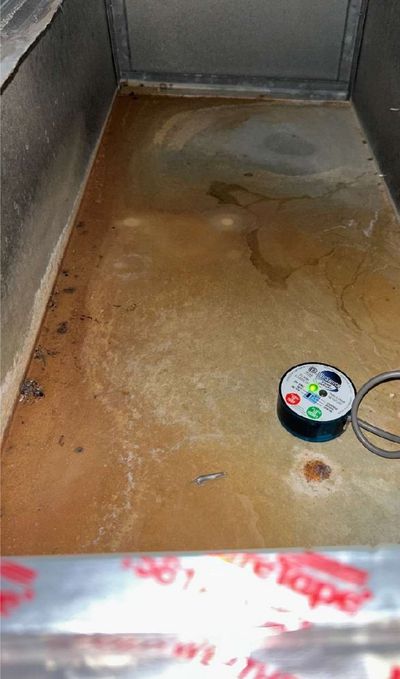
Condensate-drain leaks are one of the most common and most overlooked moisture sources in a commercial building, precisely because they happen quietly inside mechanical spaces and closets that no one visits every day.
2. Unusual Mold on the Closet Carpet Strip
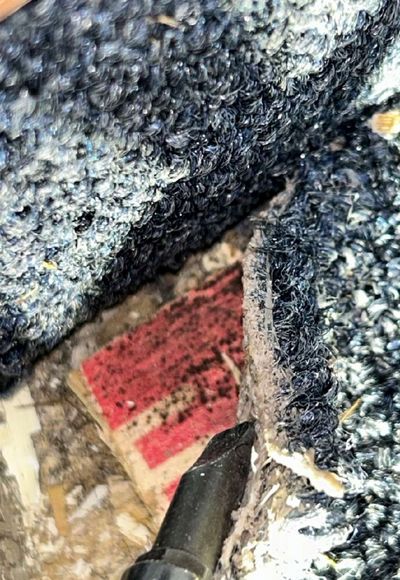
On the carpet strip in that closet, there was visible mold growth. I took a surface swab of it, and the PRO-LAB result confirmed that unusual mold was present. Carpet, the tack strip underneath it, and the subfloor edge give mold exactly what it needs when they stay wet: organic material plus moisture.
3. The Air Was Not Elevated, and the Swab Still Mattered
Here is the part worth understanding. I took air grab samples in the closet and in the HVAC central return duct, and both came back not elevated. That is genuinely good news for the people working in the office day to day, because it means the building was not filling the air with spores.
But a clean air sample did not close the case, because the swab confirmed mold growth on the carpet. Contained growth in a closed closet does not always show up in the air until it is disturbed, and the moment someone pulls up that carpet without precautions, those spores go airborne. That is why the visible growth and the swab result drive the decision, not the air number alone. It is the same principle whether the building is an office in Silverdale or a home down the road.
What Commercial Property Owners in Silverdale Should Know
This test found unusual mold on the closet carpet from past HVAC condensate leaks, with air samples that were not elevated. The recommendation was to have a qualified mold remediator evaluate and remove the mold, control humidity, add HEPA filtration in occupied rooms, keep the HVAC filter and ducts clean, maintain gutters and grading around the building, and repair any leaks within 24 hours. The EPA guideline is that any area of discoloration larger than about three feet by three feet should be professionally remediated.
For a commercial owner or property manager, the value of a test like this is that it turns a vague worry into a defined, fixable scope: a specific colony, in a specific closet, from a specific moisture source. I see the same condensate-and-closet pattern in offices and small commercial buildings across Perkasie, Sellersville, and the rest of this part of Bucks County.
If you own or manage a commercial property in Silverdale or the surrounding area and you have had a leak, schedule a mold test with All Seasons. I personally perform every test and write a report you can act on.
Bob Klebanoff
Owner, All Seasons Home Inspections
610-348-6728 | Free Estimate
Commercial and Residential Mold Testing in Bucks County:
Perkasie Sellersville Hatfield Chalfont Dublin Doylestown