In June 2026, I inspected a two-story brick rowhome on North 12th Street in the Logan / Fern Rock section of North Philadelphia, in the 19141 zip code. The house was built around 1945, on a stone foundation, with a flat built-up roof and radiator and boiler heat. It is a typical example of the pre-1950 rowhouse stock that fills these blocks.
It is also a good illustration of why this housing stock rewards a careful inspection. Original knob-and-tube circuits, mortar-joint failure, stone-foundation cracks, and aging built-up roofs are the exact recurring issues buyers in Logan and Fern Rock face, and this home had a full set of them. Here is what the inspection found.
1. Knob-and-Tube Wiring, a Frayed Service Cable, and Non-Grounded Receptacles
The electrical system was the biggest single story in this house. There was active knob-and-tube wiring in the garage, the service entrance cable where power enters the home was frayed, and non-grounded three-prong receptacles were present throughout.
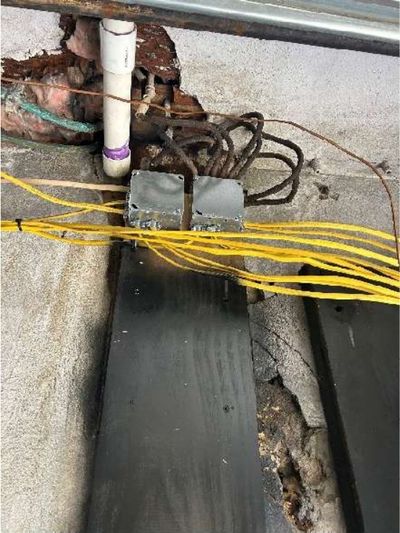
Each of these matters on its own. Knob-and-tube has no ground and its insulation grows brittle with age. Non-grounded three-prong outlets look modern but give you no grounding protection at all, which is misleading to a homeowner who assumes a three-prong outlet is safe. A frayed service entrance cable is a defect at the most important point in the system, where power enters the house. A home inspection documents where these conditions exist, and the right next step is a licensed electrician evaluating the system, because buyers of homes like this often end up budgeting for partial rewiring and insurers increasingly ask about knob-and-tube.
2. A Cracked Stone Foundation and a Wet Basement Wall
The stone foundation showed cracks and open joints, which is expected in a home of this age. More important, one section of the basement wall was blistered and water-damaged, and when I put a moisture meter on it, it measured wet. That means the moisture was active on inspection day, not old staining left behind by a problem that has since dried out.
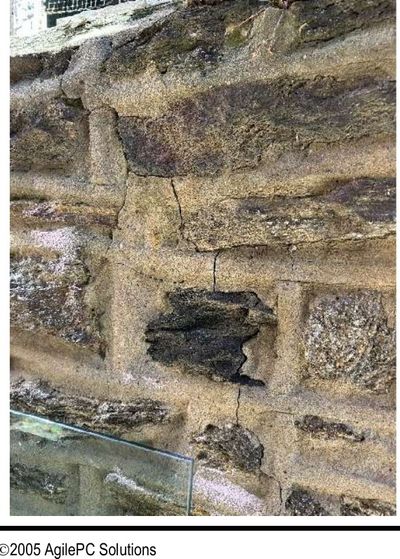
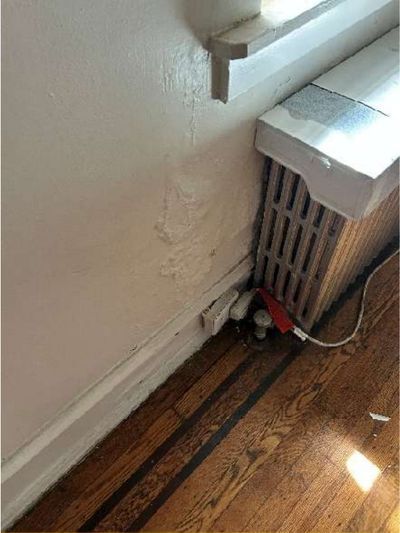
Cracks in a stone foundation are common in Logan and Fern Rock and are often manageable. A wall that measures wet is the finding that deserves attention, because active moisture keeps working on the masonry and can lead to efflorescence, spalling, and mold if the water source is not corrected. This was documented so the buyer knew to address the source rather than resurface over it.
3. A Corroded Water Heater Chimney With a Hole, and Plumbing Defects in the Garage
The metal chimney venting the hot water system was heavily corroded, with a hole rusted through it. That is a venting hazard. In the garage there was also a cracked waste stack and a leak on the water supply line.
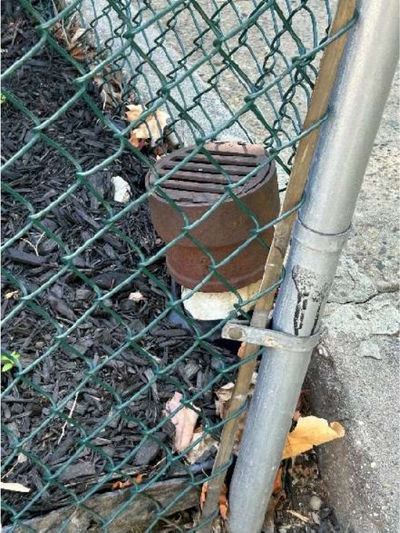
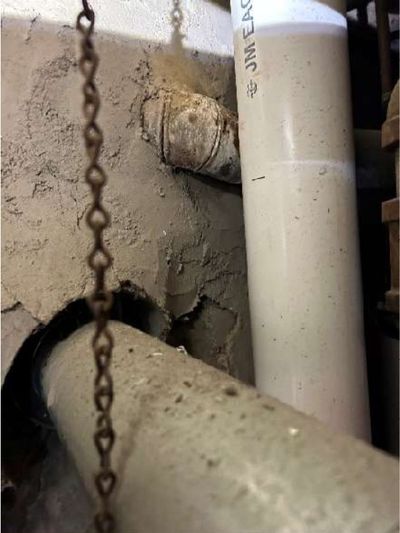
The corroded chimney is the safety finding here. Venting for a gas water heater has to carry combustion gases fully to the exterior, and a hole in that venting undermines the whole point of it. The cracked waste stack and the supply line leak are the ordinary aging-plumbing findings you expect in a house with decades-old drain and supply piping. All three were documented for a qualified contractor to correct.
4. An Aging Gas Boiler and a Corroded Water Heater
The house was heated by a radiator-and-boiler system, which is standard for the era. The Weil-McLain gas boiler was at the end of its designed service life, and the gas water heater was corroded enough that I rated its condition Exceeded, meaning past its useful life.
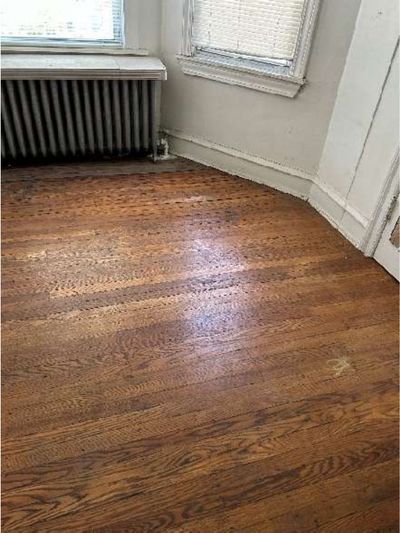
Neither of these is an emergency, and neither is unusual for the age of the house. They are budget items. A boiler and a water heater near the end of their run are a planned expense when you know they are coming, and a surprise when you do not. Documenting them means the buyer can price the replacements into their offer and their ownership plan instead of being caught out after closing.
5. A Garage With a Compromised Fire Barrier and a Door That Would Not Open
The garage ceiling had holes in it. That ceiling is the fire barrier between the garage and the living space, so holes in it are a safety finding. On top of that, the garage door did not open properly, because water supply lines had been routed in a way that obstructed it.
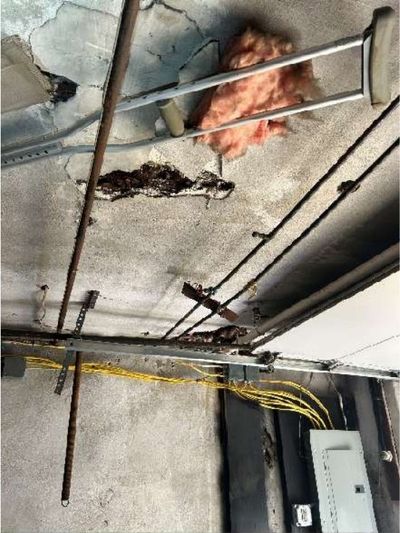
A garage is where cars, fuel, and stored chemicals sit, and the fire-rated separation between it and the house is supposed to be continuous. Every hole in that ceiling is a gap in the protection. Sealing the barrier back to a continuous surface is the correct fix, and the obstructed garage door and the supply-line routing were flagged alongside it.
6. A Damaged Chimney With No Visible Liner and a Worn Porch Roof
The chimney was damaged, with open and deteriorated brick joints, and I could see no liner inside it. The front porch roof surface was also deteriorated and near the end of its life. The flat built-up main roof and the open brick joints elsewhere on the masonry rounded out the exterior picture.
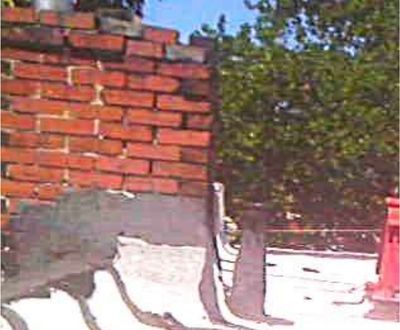
None of this is unusual for a rowhome of this age, and none of it is an emergency. An unlined or failed-liner chimney should be evaluated before any fuel-burning appliance vents into it. Open brick joints let water into the masonry and should be repointed and sealed. A worn porch roof surface is a budget item and often the first place a flat-roofed rowhome starts to leak. These were documented so the buyer could plan the masonry and roofing work rather than be surprised by it.
What Buyers Should Expect From Home Inspections in Logan and Fern Rock
This inspection found knob-and-tube wiring, a cracked and wet stone foundation, a corroded venting chimney, an aging boiler and water heater, a compromised garage fire barrier, and a damaged chimney with no liner, on a house that is a completely ordinary example of its block. That is not a bad house. It is a normal 1945 North Philadelphia rowhome, and the findings were age-related rather than a sign of neglect.
What makes an inspection in this housing stock different is knowing the pattern. In Germantown, Northeast Philadelphia, and the pre-1950 rowhouse blocks of Logan and Fern Rock, original knob-and-tube circuits, mortar-joint and repointing failure, stone-foundation cracks, and aging built-up flat roofs come up again and again. Knowing to check the garage ceiling as a fire barrier, to put a meter on a suspect basement wall, and to look for a hole in a water heater chimney comes from having inspected a lot of homes exactly like this one.
If you are buying a home in Logan, Fern Rock, or the surrounding North Philadelphia neighborhoods, schedule an inspection with All Seasons. I personally perform every inspection, and I know the pre-1950 brick rowhomes in this part of the city.
Bob Klebanoff
Owner, All Seasons Home Inspections
610-348-6728 | Free Estimate
Home Inspections in Philadelphia and the Surrounding Area:
Philadelphia Germantown Northeast Philadelphia