In September 2026, I was asked to test a home in Ambler, Montgomery County, where past water infiltration had been reported in the basement. During the walk-through, I also found visible discoloration in the crawl space, the kind of thing that is easy to miss because almost nobody spends time down there.
What makes this test worth writing up is where the positive result actually came from. I did not pull the air sample from the crawl space where the discoloration was visible. I pulled it from the HVAC central return duct. That was a deliberate choice, and it is the whole story of this test.
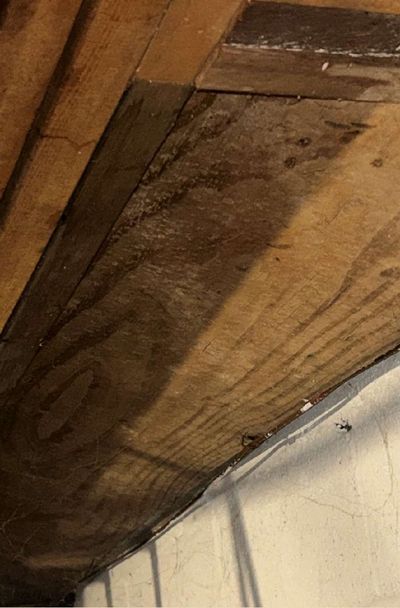
1. Past Water Infiltration and Discoloration Across the Joists
The homeowner had reported past water infiltration in the basement, and once I got into the crawl space, I found dark discoloration spread across several joists and the underside of the subfloor. On its own, a stain like this tells you moisture has been present. It does not tell you whether anything is actively growing, or whether it has anywhere else to go.
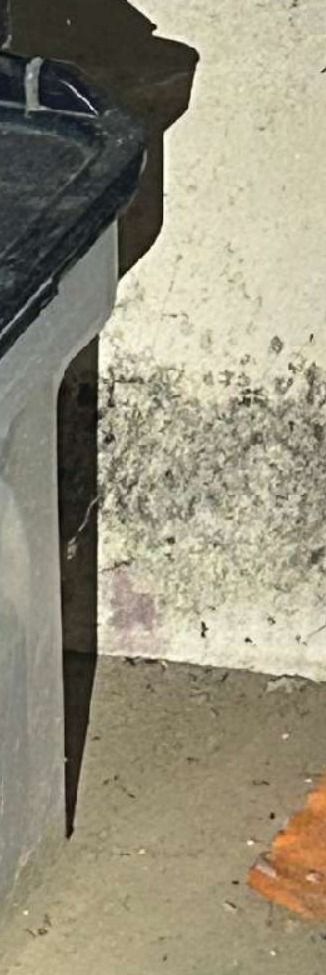
2. A Band of Mold Growth on the Crawl Space Wall
Further along the same crawl space, there was a distinct band of dark mold growth on the foundation wall. This was tightly localized, sitting low against the wall in a spot that stays damp and dark almost year-round, exactly the conditions mold needs to establish and hold on.
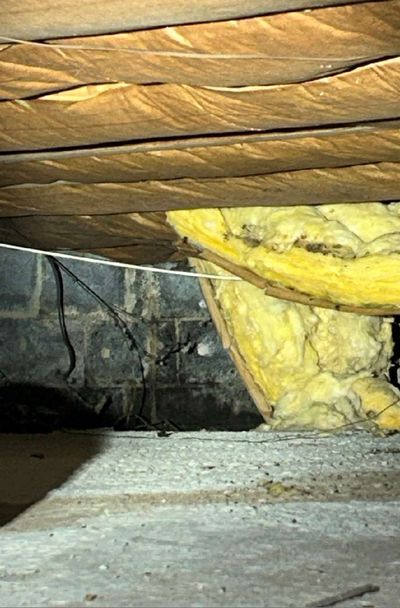
3. Insulation Sagging Away From the Foundation Wall
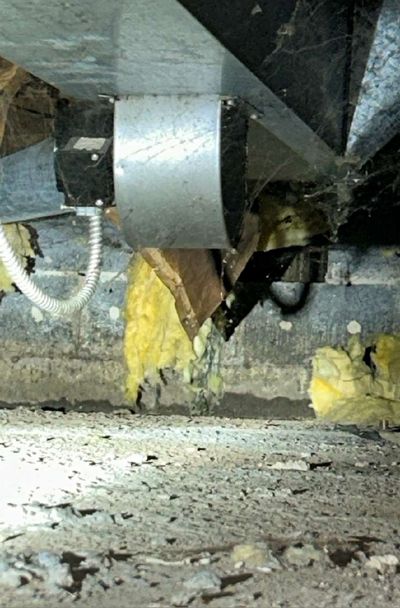
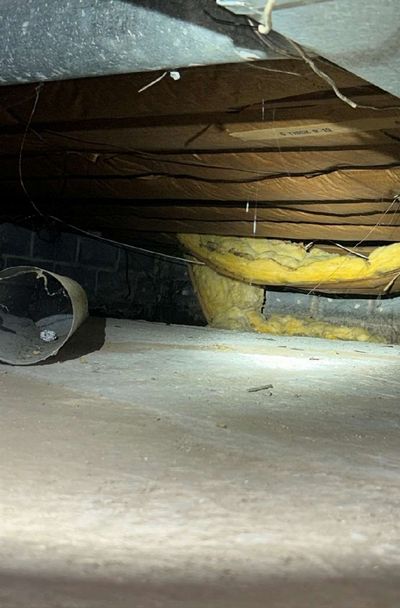
The batt insulation in this crawl space had pulled loose from the foundation wall in multiple spots and was sagging down into the open space below the joists. Fiberglass insulation does not fail like this on its own. It typically means the insulation has gotten wet, dried, and gotten wet again, cycling enough times to break down the paper facing and the adhesive holding it in place.
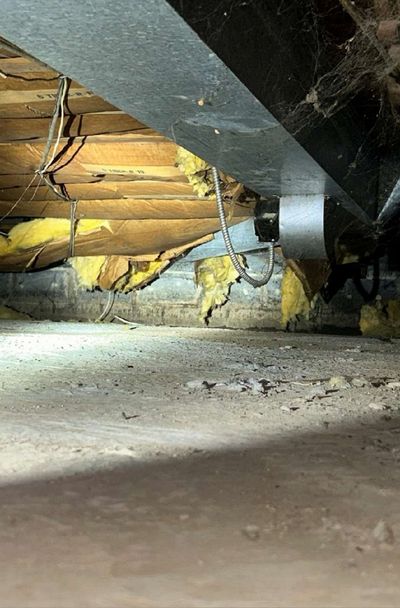
4. HVAC Ductwork Running Through a Damp Crawl Space
This crawl space also carries the home's HVAC ductwork, suspended between the joists and running the length of the space, with sagging insulation draped around it. That layout is common in homes throughout this part of Montgomery County, and it is exactly why a damp, discolored crawl space is not just a crawl space problem. The ductwork sitting in it ties directly into the air the whole house breathes.
5. Why the Air Sample Was Taken in the HVAC Central Return, Not the Crawl Space
With discoloration on the wall, staining across the joists, and failing insulation all pointing to a chronic moisture problem in the crawl space, the obvious move would be to grab the air sample right there. Instead, I took it from the HVAC central return duct.
That is a deliberate choice, not a convenience. The return duct is where the system pulls air from before pushing it out through the supply side and into every room in the house. A crawl space air sample tells you about conditions in that one space. A return duct sample tells you what the system is about to distribute everywhere else. When a damp, discolored crawl space is connected to the return side of an air handler, whether through ductwork routed inside it or air leaking in around it, that connection turns a contained problem into a whole-house one. Testing the return is how you find out whether that has actually happened, instead of assuming it based on what the crawl space looks like.
6. What the Lab Found: Elevated Stachybotrys in the Return Air
The lab result came back elevated for Stachybotrys in the air sample collected from the HVAC central return duct. Stachybotrys chartarum, commonly called black mold, does not grow from a brief or one-time water event. It requires sustained, ongoing moisture to establish a colony. Finding it in the return air meant the moisture conditions in this home, whether in the crawl space specifically or the broader air path feeding the return, had been present long enough for one of the more demanding mold species to take hold.
7. What Stachybotrys in a Return Duct Means, and the Recommended Next Steps
Read together, the crawl space findings and the return duct result tell a consistent story. The discoloration on the joists, the mold band on the wall, and the sagging insulation are all signs of chronic moisture in the crawl space. The elevated Stachybotrys result in the return duct is confirmation that this moisture problem has already reached the home's air handling system, not just the crawl space itself.
The recommendation was to have a qualified contractor further evaluate and remediate the mold to reduce the risk of a health hazard. Beyond remediation, the moisture side has to be addressed directly or the problem returns. That means keeping the vents clean, increasing humidity control and HEPA filtration in occupied rooms, keeping gutters and downspouts clean and properly aligned, maintaining positive grade around the foundation, and trimming vegetation back from the exterior walls. Testing tells you what you're dealing with. It doesn't fix the water source, and that has to happen for any remediation to hold.
What Ambler Homeowners Should Know About This Test
The lesson from this Ambler crawl space is not that every stained joist or every damp crawl space has mold in the ductwork. It's that a visible problem in one part of a home doesn't tell you where the sampling should happen, or how far a moisture issue has actually traveled. The discoloration here was in the crawl space. The confirmed result came from the return duct, which is exactly where a moisture problem stops being local and starts being distributed.
Ambler and the surrounding Horsham and Dresher area have plenty of homes with crawl space foundations and ductwork routed right through them. If your home has a history of water infiltration, visible discoloration in a crawl space, or a musty smell you can't place, air sampling at the HVAC return is worth doing precisely because it tells you what the visible problem alone cannot.
If you want a crawl space or HVAC system tested, schedule a mold test with All Seasons. I personally perform every test and write every report.
Bob Klebanoff
Owner, All Seasons Home Inspections
610-348-6728 | Free Estimate
Mold Testing in Ambler and the Surrounding Area:
Ambler Horsham Dresher Maple Glen Upper Dublin Fort Washington Spring House