I get a lot of questions from Philadelphia-area renters and condo buyers about mold in apartments. The questions usually start the same way: "The apartment smells musty, but the landlord says it's normal. Should I be worried?" Or: "We're thinking of buying a condo, and the listing says there was a water leak in the laundry room last year. Is that a problem?"
The answer in both cases is: get it tested. But before you do, let me tell you what I've actually found in apartment and condo inspections in this region, because mold in apartments is different from mold in houses. It hides in different places, it raises different questions about responsibility, and it requires a different action plan.
What makes mold in apartments and condos different from houses?
Apartments and condos present unique mold challenges. You don't control the roof (the landlord or building does), you don't control shared HVAC systems, and water can infiltrate from neighboring units. You also have less control over ventilation: bathroom and kitchen exhaust might be ducted to a shared system, or not properly ducted at all. Humidity builds up faster in enclosed spaces, especially if the building is older or poorly ventilated.
I recently inspected a Philadelphia-suburb apartment complex where we found mold in three separate areas: the laundry closet, the foyer closet, and the kitchen. The air quality testing revealed Cladosporium, Hyphae, and Penicillium/Aspergillus. When the foyer closet wall was later opened during remediation, it revealed heavy mold growth behind the drywall: the kind that suggests months of water infiltration that nobody could see.
That building looked fine on the surface. The common areas were clean, the hallways were painted recently, and most residents had no idea there was a problem.
Where does mold hide most dangerously in apartments?
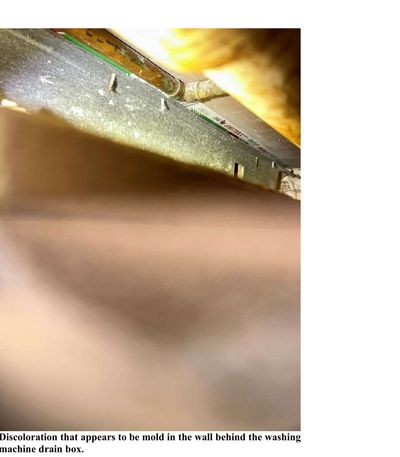
Laundry Closets are mold central in apartment buildings. Why? Because they concentrate moisture in a small space. Your washing machine drain line, hot water supply line, and condensation from the dryer all create high humidity. Add poor ventilation, and mold grows fast, often behind walls or inside drain boxes where you can't see it. Cladosporium and Penicillium/Aspergillus can begin colonizing damp surfaces in as little as 24 to 48 hours of water exposure. I've found active mold in washing machine drain areas in many apartment inspections.
Bathroom and Kitchen Exhaust Areas are the second major location. If exhaust ducting is poorly sealed, disconnected, or vented into the attic instead of outside, moisture accumulates. In older Philadelphia buildings, I've seen exhaust fans ducted directly into wall cavities above the unit, and the mold growing there is severe.
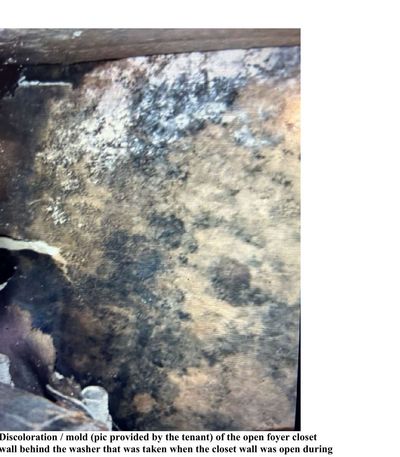
Foyer Closets and Entry Areas are problematic in apartments with exterior walls. If water infiltrates at window sills, doors, or foundation line, it wicks into nearby closets. The closet stays closed most of the time, no air circulation, no dehumidification, and mold thrives. In the apartment complex inspection I mentioned earlier, the foyer closet had heavy mold behind the wall, undetectable until the drywall came off.
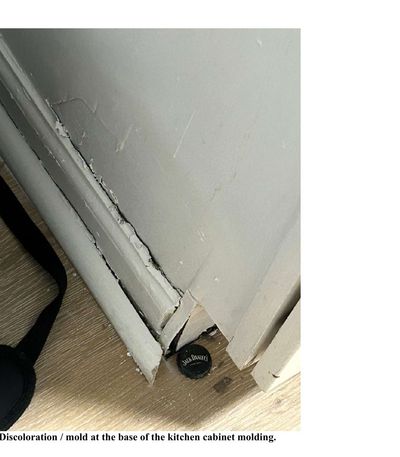
Kitchen Cabinets Under Sinks are obvious but easily missed. Leaking supply lines under sinks, dripping P-traps, and slow seepage create wet environments in cabinet boxes. Mold grows on the inside surfaces, on the back panel, and along the floor of the cabinet. Renters often don't look inside, and the smell gets attributed to the building or the neighborhood.
HVAC Returns and Ductwork are a silent killer in apartments. If your HVAC return air is pulling humid air from a bathroom or kitchen, and if the return ductwork isn't insulated or is poorly sealed, mold can grow inside the ducts and spread throughout your unit. In buildings with central HVAC serving multiple units, a problem in one unit can affect others.
Exterior Walls and Window Areas in apartments facing north or receiving minimal sun are prone to condensation during winter. Water condenses on the inside of windows, runs down the wall cavity, and mold grows in the insulation and rim band area above the foundation. Some residents chalk this up to old windows, but it's moisture and mold.
What apartment mold warning signs do most renters overlook?
Most apartment residents wait to see visible mold before they get concerned. By that point, the problem is already established. Here are the warning signs that should prompt you to call for testing:
Musty Smell. I hear this one constantly: "The apartment just has a musty smell. Doesn't the whole building smell like that?" No. A musty smell usually comes from gases (mVOCs) released by actively growing mold. If you notice it when you first enter, or if it's worst in one specific area (closet, bathroom, laundry room), that's a sign of mold growth nearby.
Recent Water Damage or Leaks. If the landlord just fixed a leak, whether from the unit above, the roof, or plumbing, assume there's mold risk. Mold can begin growing within 24–48 hours of water exposure. Even if you don't see it, the conditions are favorable. Get testing done 2–4 weeks after any water damage. In Pennsylvania, a landlord must be notified and given a reasonable time to make repairs, so document and send that notification in writing immediately.
Condensation and Moisture Patterns. Persistent condensation on windows in your apartment means you have a humidity and moisture problem. Soft or spongy spots on walls or baseboards, or peeling paint and wallpaper in localized areas, point to hidden water and mold.
Respiratory Symptoms That Improve Outside. If you find yourself coughing, sneezing, or congested when you're home but better when you're outside or at work, mold could be the cause. Have your air tested.
Tenant vs. Owner: Who Pays for Mold in Rentals?
This is the question that creates conflict in Philadelphia-area rental situations. The legal reality in Pennsylvania breaks down as follows:
The landlord is responsible if mold results from the building's structural or maintenance failure: water leaks from the roof, plumbing, shared systems, or poor ventilation in common areas. The landlord must maintain a habitable premise.
The tenant is responsible if mold results from how they're using the unit: leaving windows closed and humidity high, blocking vents, not reporting leaks promptly, or creating conditions that promote mold growth.
In practice, the distinction is messy. Most mold in apartments involves both factors: maybe there's a slow leak the landlord hasn't fixed (landlord's responsibility) but also poor ventilation and humidity the tenant could improve (tenant's responsibility).
Document everything in writing. If you notice mold, musty smells, or water damage, email the landlord (not a phone call: it needs to be in writing). Describe the location, date, and any symptoms you're experiencing. Take photos. Ask them to investigate and remediate. Keep the email. If they ignore it or claim they don't see a problem, request professional testing at their expense. In Pennsylvania, if a landlord fails to address a habitability issue after being notified, tenants have legal recourse.
For condo buyers, it's simpler: get air quality testing before you close. You'll know what you're getting.
Philadelphia renters, from November 1, 2026: the city's Safe Healthy Homes Act changes what a landlord attests to and how long a cited violation can go uncorrected. It does not mention mold. Here is how leaks and mold fit under the new rules.
Why does air quality testing matter more in apartments than in houses?
In houses, you might do one whole-home air test. In apartments, the situation is different. Your air quality is affected by your neighbors' units, shared HVAC systems, and building maintenance. A test in your unit tells you what spore levels you're breathing day to day. The EPA's guidance on mold and health notes that any visible mold or musty odor warrants investigation. In a multi-unit building, moisture from one unit can migrate through walls, floors, and shared ductwork into adjacent units.
I recommend testing if:
- You notice musty odors in any part of your apartment
- There's been recent water damage or leaks
- You're experiencing respiratory symptoms that correlate with being in the unit
- You're considering buying a condo (non-negotiable for due diligence)
- A neighbor has had water damage that could affect your unit
- You live above or adjacent to common areas like laundry rooms
Testing starts at $290 for a certified air quality test with PRO-LAB analysis. You get lab results showing exact spore types and counts. You'll know whether mold is an issue and what remediation looks like. For comparison, professional mold remediation for a single apartment room typically runs $500 to $1,500: many times the cost of the test that could have caught the problem early.
What does a real Philadelphia-area apartment mold inspection find?
Let me walk you through a real inspection from an apartment complex in the Philadelphia suburbs (address anonymized for privacy). This is exactly the kind of situation where apartment dwellers overlook mold.
The unit looked clean. No visible mold on any surface the resident could see. But during inspection, we found:
Laundry Closet: The washing machine drain box had water pooling, and mold was visible along the seams. The resident had no idea. The closet door stayed closed most of the time.
Foyer Closet: Initial inspection showed discoloration on the walls. When the closet was opened during remediation and the drywall removed, heavy mold covered the wall cavity behind the closet. This was months of growth from water infiltration at the building exterior.
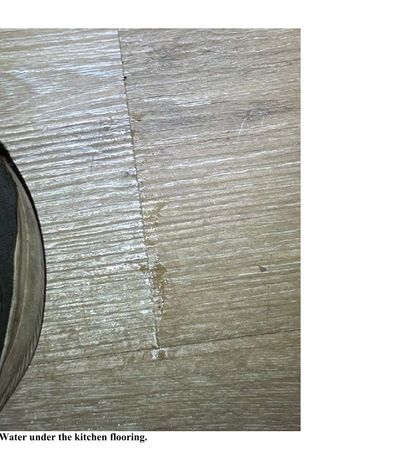
Kitchen: Water was present under the kitchen flooring. The cabinet bottoms showed mold growth. The sink drain P-trap was slow, allowing moisture to accumulate.
HVAC Swab: This was the most significant finding. The HVAC return in the unit showed unusual mold growth on the swab. In buildings with central air handling, a contaminated return can circulate spores through the unit whenever the system runs.
The lab results (PRO-LAB Certificate #1924221) confirmed Cladosporium, Hyphae, and Penicillium/Aspergillus on the surface swab. Air quality testing showed elevated spore counts. This was a multi-location problem that required building-level and unit-level remediation.
The resident's takeaway? "I had no idea any of this was there." That's how it works in apartments. The problems are hidden until someone opens the walls or does professional testing.
What should renters and condo buyers do if they suspect apartment mold?
Document everything in writing, then escalate. Renters should photograph the problem with dates, email the landlord requesting inspection and remediation, and keep every written exchange as legal protection. Condo buyers should build professional mold testing into the inspection contingency and test both the unit and any shared spaces they can reach.
If You're Renting:
- If you smell mold, see staining, or notice condensation, document it immediately with photos and dates.
- Email the landlord describing the issue and requesting inspection and remediation.
- If the landlord is unresponsive, request professional testing at the landlord's expense.
- Keep all written communication. This is your legal protection.
- If the landlord refuses to remediate a confirmed mold problem, consult a tenant rights organization or attorney in your area.
If You're Buying a Condo:
- Include professional mold testing in your inspection contingency.
- Test the unit plus common areas (shared hallway, laundry room, mechanical closet) if you have access.
- Ask the seller about any previous water damage, leaks, or remediation.
- Review the building's maintenance records if possible, especially roof repairs and plumbing work.
- If testing shows elevated mold, negotiate remediation before closing or request a price reduction to address it yourself.
General Best Practices:
- Run bathroom and kitchen exhaust fans during showers and cooking, and for 20 minutes after.
- Wipe down condensation on windows regularly.
- Don't block heating vents or air returns.
- Keep closet doors open periodically to allow air circulation.
- Use a dehumidifier in areas prone to moisture (laundry room, bathroom).
- Report leaks immediately to the landlord or property manager.
Is apartment mold in the Philadelphia region common enough to test for?
Mold in apartments and condos is more common in the Philadelphia region than most residents realize. It hides in places you can't see: behind closet walls, inside drain boxes, in HVAC ductwork. A musty smell is your first warning sign. Visible mold or water damage demands action. And if you're buying a condo, testing is essential due diligence.
If you're an apartment renter in the greater Philadelphia area concerned about mold, don't accept "musty smell" as normal. Document it, report it, and demand testing. If you're a condo buyer, I strongly recommend air quality testing before you close.
I personally oversee every mold-related inspection and test we do. If you're dealing with a potential mold situation in your apartment or condo, whether you're in Norristown, Upper Darby, Germantown, or anywhere across the Philadelphia suburbs, call me. I can tell you exactly what's happening and what needs to happen next.
Philadelphia's housing code requires landlords to maintain interior temperatures above 68°F from October through April.
Need Professional Mold Testing?
All Seasons provides PRO-LAB certified mold testing and air quality analysis across the Philadelphia region and South Jersey. Owner-operator Bob personally collects all samples. Results in 2-3 days. Call 610-348-6728 for a free estimate.
Mold Testing in the Philadelphia Area:
Philadelphia Northeast Philadelphia Upper Darby Germantown Norristown Conshohocken Ardmore