In June 2026 I performed mold testing in a condo on the 18th floor of a high-rise on Stenton Avenue in Chestnut Hill. An active leak had shown up in a bedroom closet, and there was visible mold both in the closet and on the bedroom mini-split unit. The resident wanted to know what they were actually dealing with before calling a remediator or the building.
This is a situation condo and apartment residents run into more than people expect. You can see the water and you can see the growth, but you cannot see where the water is coming from, because it starts behind a wall or inside a building system you do not control. Here is what the testing found, and why targeted swab testing is the right move when a leak turns up in a unit you share a building with.
1. An Active Leak and Mold in the Bedroom Closet
The bedroom closet was the center of the problem. One corner showed widespread dark spotting spreading up the wall, with heavier growth concentrated at the baseboard and the wall-floor junction where moisture collects. The trim was staining and the carpet at the base of the wall was affected. This was not old cosmetic discoloration. It was tied to an active leak.
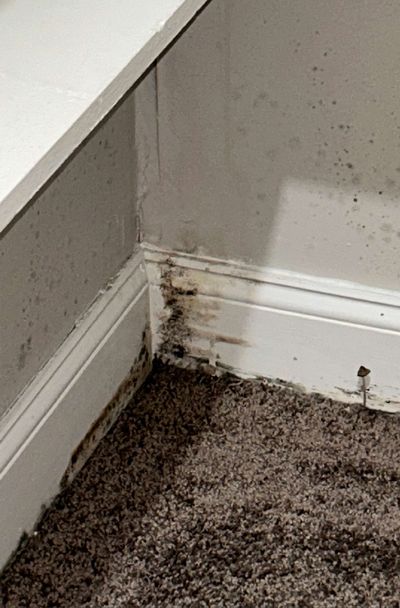
In a single-family home you can often walk the moisture back to its source. In a high-rise condo you frequently cannot, because the water may be coming from the unit above, a supply or drain line inside a shared wall, or the building envelope. That is the first reason testing matters here: it establishes that the growth is real and active, which is what justifies pushing the building or the association to find and fix the source.
2. Where the Water Was Getting In
Near the closet, the ceiling and upper wall showed the kind of damage a sustained leak leaves behind: bubbled and peeling paint, a failed section of drywall at the corner, and dark staining and mold at the breach. Water had been tracking into this assembly long enough to break down the finish and let mold establish on the material behind it.
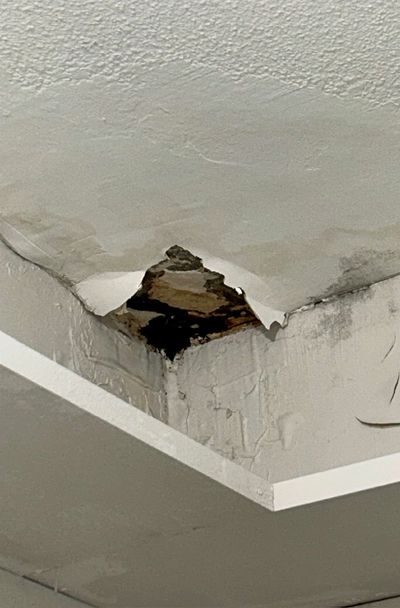
This is the part a resident cannot solve on their own. The visible damage is inside the unit, but the source is very likely outside of it, in the structure or a neighboring unit. Documenting the breach and the growth around it is what turns a vague complaint into a specific, evidence-backed request to the building.
3. Confirming the Moisture Was Still Active
Before swabbing, I checked the affected materials with a moisture meter. The reading at the closet baseboard came back high, confirming the area was still actively wet rather than dried out from a past event. That distinction matters. Active moisture means mold is still being fed and the leak is ongoing, not resolved.
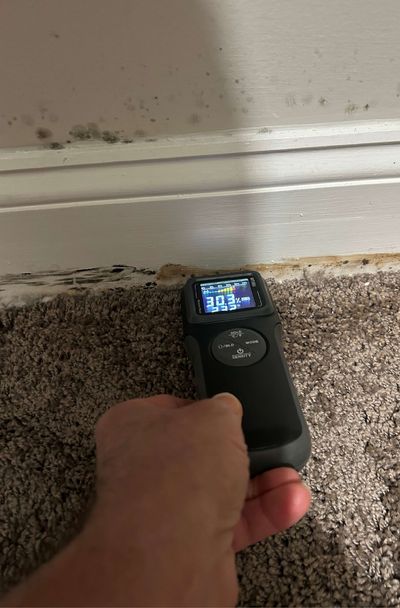
Pairing a moisture reading with the visible growth is how you separate an ongoing problem from a historical stain. Here, the numbers backed up what the wall was showing.
4. What We Swabbed, and Why Two Surfaces
At the resident's request, I took surface swabs in two places: the closet, where the heavy growth was, and the bedroom mini-split unit, which also showed visible mold. Swabbing both let the lab grade each surface on its own. A swab samples exactly the spot you point it at, so it answers a precise question: is this specific surface an active mold source, and how heavy is it?
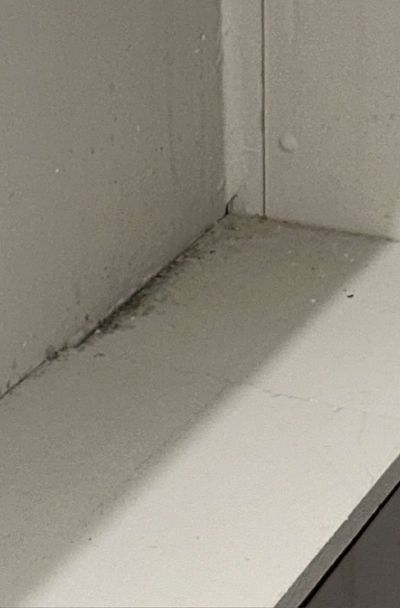
That is the advantage of targeted swab testing in a condo. You are not guessing at a whole-room average. You are getting each visible problem area graded individually, which tells you where the real severity is and where it is not.
5. The Closet Result: High Fungal Growth
The closet swab came back High Fungal Growth, active. That is the heavy end of the scale and it confirmed what the wall was showing. The combination of an active leak, a still-wet baseboard, and a High result means this was not a wipe-it-down situation. It was an active mold source driven by ongoing water.
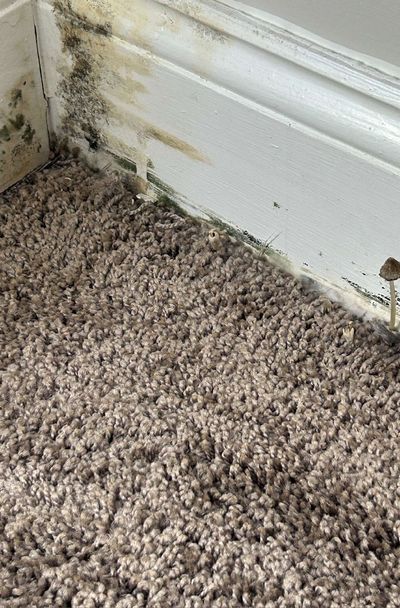
The small mushroom growing out of the carpet at the base of the wall tells the same story the lab did. Mushrooms only fruit where organic material has been wet, continuously, for a long time. That is the signature of a sustained leak, not a one-time spill, and it is exactly why the water source has to be found and stopped, not just the surface cleaned.
6. The Mini-Split Result: Very Low / Minimal Growth
The mini-split swab came back Very Low / Minimal Fungal Growth. The unit showed dark speckling along the interior louvers and housing, which is common on a mini-split because it runs cold and produces condensation. But the lab grade was light, a very different result from the closet.
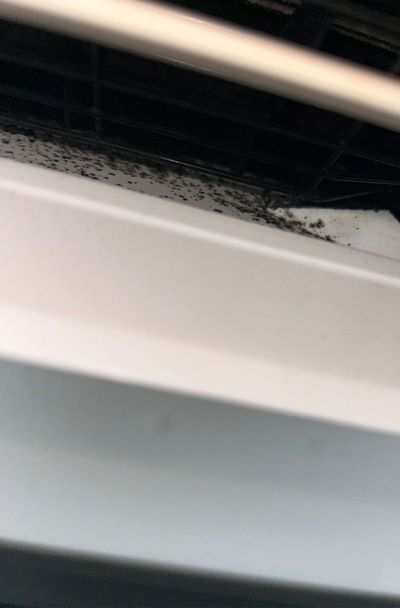
This is the value of grading each surface separately. Two areas of the same bedroom both had visible dark growth, and a quick glance might treat them as one problem of equal weight. The lab said otherwise: the closet was the serious source, and the mini-split was a minor, maintainable issue. That changes where the money and effort should go.
What Chestnut Hill Condo and Apartment Residents Should Know About Mold Testing
The recommendation on this unit was straightforward. Have a qualified mold remediator further evaluate, remove the mold, and remediate the water infiltration to reduce the health risk. Keep the vents, HVAC filter, and ducts clean, control humidity, and add HEPA filtration in the rooms most often occupied. Dehumidify in the warm months. And have the plumbing leak or water infiltration repaired within 24 hours, because everything else is temporary until the water stops. The EPA advises that any area of discoloration larger than three feet by three feet be professionally remediated.
What makes a condo or apartment different from a house is the wall between you and the source. In a high-rise, the water that wets your closet may originate in the unit above, in a shared building line, or in the roof and facade, none of which you can inspect yourself. Targeted swab testing is how you convert what you can see into documented, graded results you can act on and hand to the people who can fix the source: your condo board, your association, your landlord, or a remediation contractor. A report that says High Fungal Growth in the closet and Minimal on the mini-split is a far stronger position than a photo of a stain.
If you rent or own a condo or apartment in Philadelphia, Chestnut Hill, or a neighboring community like Germantown, and you have a known leak or visible growth you cannot trace, testing is the step that tells you how serious it actually is. I personally perform every test and write every report.
Bob Klebanoff
Owner, All Seasons Home Inspections
610-348-6728 | Free Estimate
Mold Testing in Chestnut Hill and the Surrounding Area:
Chestnut Hill Philadelphia Germantown Wyndmoor Glenside