On November 9, 2026, I tested a home in Voorhees, NJ. Past leaks were reported and noted at the property, and the photos in the report show opened ceilings, water-stained ceilings and heavy discoloration on one ceiling.
An air sample was requested in the first-floor bathroom. The lab result indicated Very High mold and Stachybotrys present in that sample. A result is a sample of the conditions in the area tested at the date and time of sampling, so below I stick to what the report says and what it does not.
1. Past Leaks Reported and Noted
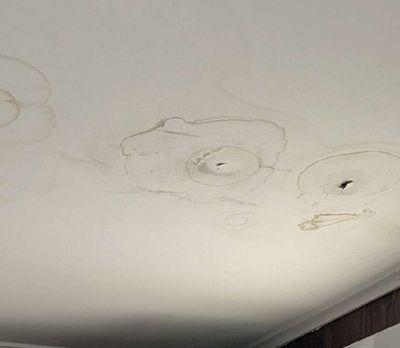
The report states that past leaks were reported and noted. It does not say where each leak was, when it happened, or whether it has been repaired. The ring-shaped stains in this ceiling photo are the kind of marks past water leaves behind.
2. Ceiling Opened, Framing and Bath Exhaust Exposed
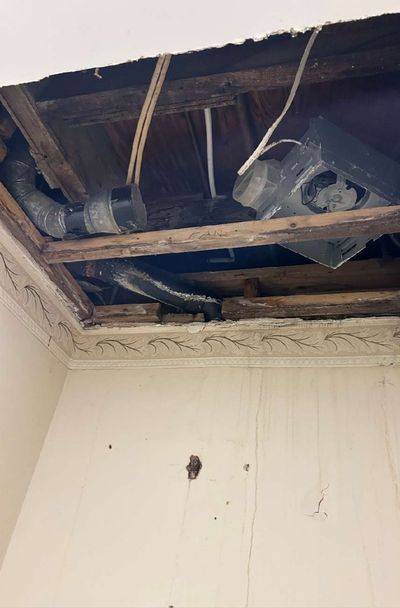
In one photo a section of ceiling has been opened, exposing the joists, a bath exhaust fan housing and duct, with vertical water streaks on the wall below. The report does not say who opened the ceiling or why, and nothing in the opened cavity was sampled.
3. Heavy Discoloration Across a Ceiling
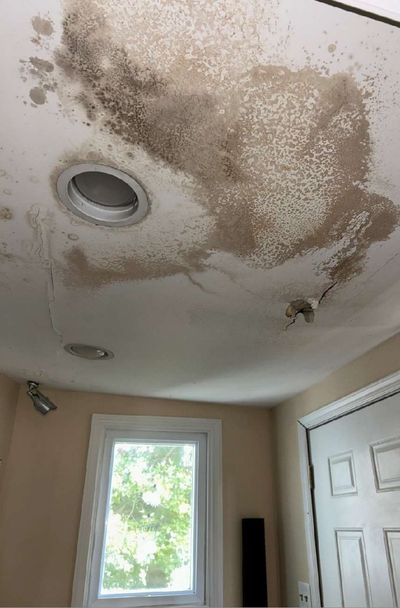
This ceiling has heavy dark and brown discoloration spread around a round fixture, with a cracked seam and peeling paint. Discoloration tells you moisture has likely been present. It does not tell you what is growing, and the report does not identify this surface as the source of the air result.
4. A Water-Stained Drop Ceiling Tile
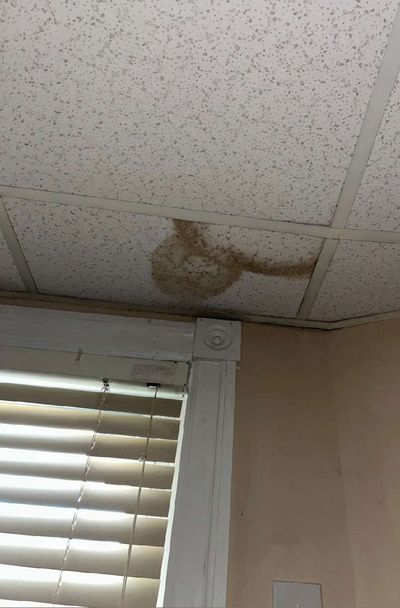
A drop-ceiling tile above a window shows a brown water stain. A stain like this means water reached the tile at some point. The report does not say whether the source has been fixed.
5. Bubbled, Peeling Wall Below an Opened Ceiling
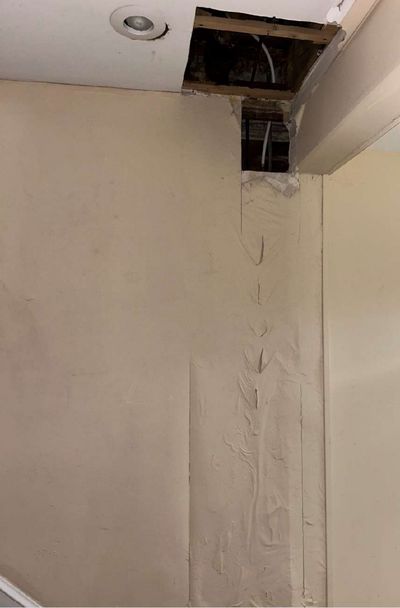
At one corner the ceiling and wall have been opened, and the wall surface below the opening is bubbled and peeling. That pattern is consistent with moisture reaching the wall. The report does not state the cause.
6. Where the Air Sample Was Taken: The First-Floor Bathroom
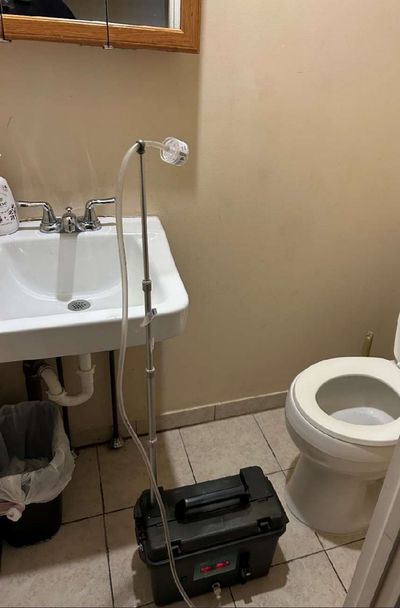
The air sample was taken in the first-floor bathroom, at the customer's request. The photo shows the sampling pump and spore-trap cassette set up in that room. No mold is visible in the bathroom itself, which is a good reminder that an air sample measures what is in the air, not just what you can see.
7. What the Lab Found, and the Recommended Next Steps
The lab result indicated Very High mold and Stachybotrys present in the bathroom sample. Stachybotrys is a mold genus, commonly called black mold. The cover letter reports the rating and not a spore count. The reference guide included with the report defines Very High as over 10,000 spores per cubic meter, "Serious contamination. Immediate professional remediation required." For Stachybotrys it says the mold is not found in normal outdoor air, and that "any indoor detection, even at low counts, indicates an active indoor mold problem requiring immediate investigation." Those are the guide's words, not a measured count for this home.
The recommendation was to have a qualified contractor further evaluate and remediate the mold to reduce the risk of a health hazard. The report also advised increasing ventilation, keeping the vents clean, increasing humidity control and HEPA filtration in the most occupied rooms, keeping gutters and downspouts clean and aligned, maintaining a positive grade around the foundation, installing drainage if necessary, trimming vegetation back from exterior walls, dehumidifying during the warm months, keeping the HVAC filter and ducts clean, and having plumbing leaks or water infiltration repaired within 24 hours. It also notes that the EPA recommends that any area of discoloration 3 ft. x 3 ft. be properly remediated.
I test only. I never do or sell remediation, so nothing in this recommendation benefits me.
What Voorhees Homeowners Should Know
This report ties together past leaks, stained and opened ceilings, and a Very High air result with Stachybotrys in one room. It does not say where the spores came from, and it does not say the other rooms were sampled. That is the honest boundary of an air sample: it tells you about the area tested at that date and time.
If your Voorhees home has a history of leaks, ceiling stains, or a musty smell, testing tells you what you are dealing with before you pay anyone to fix it. Homeowners in nearby Cherry Hill and Marlton can book the same way. I personally perform every test and write every report, and lab results typically come back in 2-3 business days.
Bob Klebanoff
Owner, All Seasons Home Inspections
610-348-6728 | Free Estimate
Mold Testing in Voorhees and the Surrounding Area:
Voorhees Cherry Hill Haddonfield Marlton Mount Laurel Haddon Township Gloucester Township Moorestown